Top SMB SaaS Companies Leveraging AI for Growth
Explore the top SMB SaaS companies leveraging AI technology to boost productivity, enhance efficiency, and maintain a competitive edge in today's market.

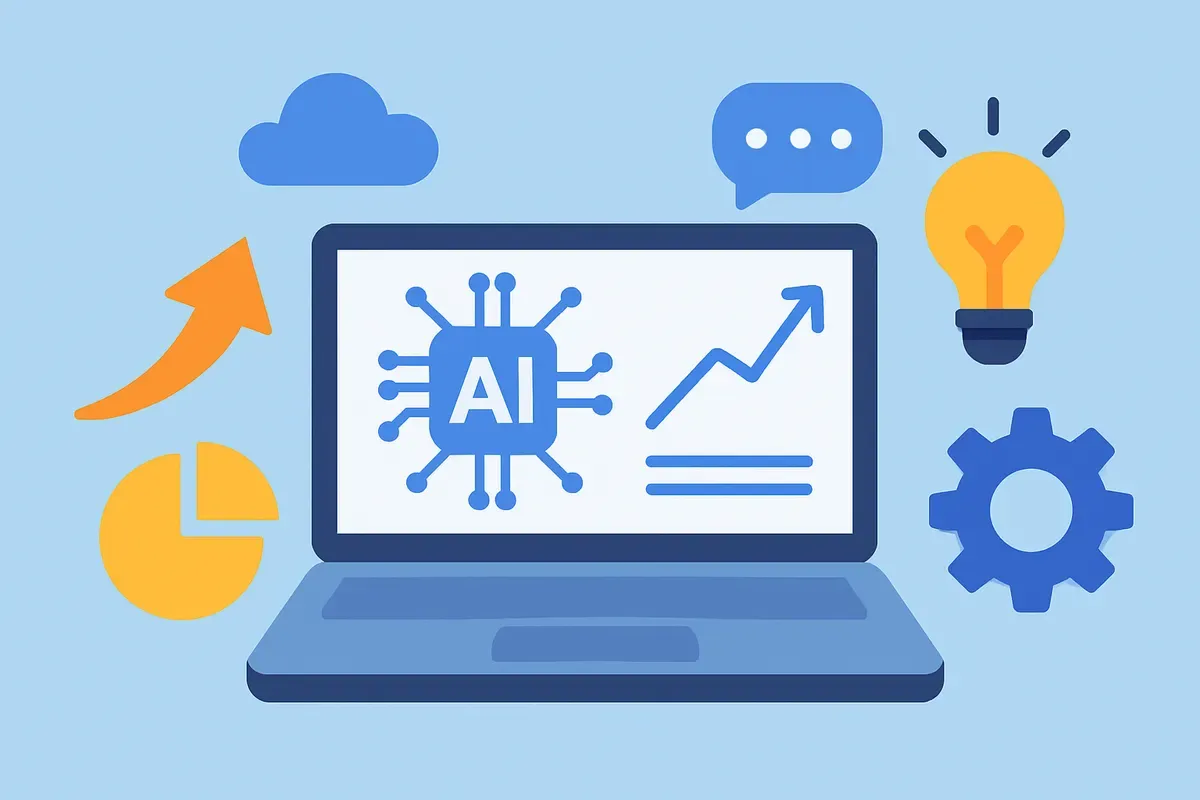
Top SMB SaaS companies are small to medium-sized businesses in the software-as-a-service sector using AI to grow and improve efficiency.
Today, technology is key to business success. Smart SMBs are using artificial intelligence. They don't just use AI; they integrate it to change how they work. This helps them compete with bigger companies and offer solutions that engage customers. By using AI, these top SMB SaaS companies turn challenges into chances for innovation and growth.
AI's rise in the SaaS sector is not just a trend—it's essential. As the market gets more competitive, these companies use AI to improve services, enhance customer experiences, and predict future trends. This proactive approach boosts growth and establishes them as leaders. By adopting AI, they set standards for others in the fast-changing tech world.
What Makes a SaaS Company Stand Out in the SMB Market?
A SaaS company stands out in the SMB market by offering scalable, easy-to-use, and cost-effective solutions for small business needs. Successful companies provide strong customer support and keep innovating with technology like AI.
Understanding SMB Needs
SaaS companies must understand the unique challenges small businesses face. SMBs often need software that is affordable and easy to use. Solutions like QuickBooks by Intuit are popular because they simplify complex accounting tasks, making them accessible for non-experts (source: Novo). By addressing specific pain points—such as managing finances or enhancing productivity—SaaS providers can capture and retain a loyal customer base.
Scalability and Flexibility
The ability to scale solutions as a business grows is crucial for SaaS companies targeting SMBs. Products should offer customizable features that grow with a business’s needs. Shopify, for example, allows small retailers to start with basic e-commerce features and expand as their customer base increases (source: Seedium). Flexibility is key, enabling businesses to adapt software functionalities according to their evolving requirements.
Leveraging AI for Innovation
AI technologies can enhance SaaS offerings by improving efficiency and personalizing user experiences. Microsoft Office 365, for instance, integrates AI to automate routine tasks and provide smart recommendations, thereby increasing productivity for small teams (source: Datamation). AI features like predictive analytics can help SMBs make informed decisions, giving them a competitive edge.
User Experience and Support
User experience is paramount; software should be intuitive and easy to navigate. Google’s GSuite is renowned for its seamless integration and user-friendly design, which helps small teams collaborate efficiently (source: Vertice). Additionally, offering exceptional customer support is non-negotiable. SMBs often lack dedicated IT resources, so responsive support can significantly influence their satisfaction and loyalty.
Competitive Pricing
Affordable pricing models tailored for small businesses can make a SaaS company appealing. SMBs typically have limited budgets and require solutions that offer excellent value. Adobe provides tiered subscription plans allowing small businesses to access critical design tools without overspending. Flexible pricing aligns with varied business capacities, making the software accessible to a broader audience. Understanding the distinct needs of small businesses, offering scalable and flexible solutions, leveraging AI technology, focusing on user experience and support, and maintaining competitive pricing are key strategies for SaaS companies to stand out in the SMB market. By excelling in these areas, companies like Intuit, Google, and Adobe have become trusted partners for small businesses worldwide, offering tools that drive growth and efficiency.
Top SMB SaaS Companies and Their AI Innovations
Leading SMB SaaS companies like Intuit, Google, Adobe, Shopify, and Microsoft use AI to enhance their software services. These innovations provide small businesses with powerful tools to streamline operations and drive growth.
Intuit's AI-Powered Financial Tools
Intuit stands out for its AI-driven solutions in accounting and financial management. QuickBooks uses machine learning to automate bookkeeping tasks, categorize expenses, and generate predictive financial insights. This helps small businesses maintain their financial health without a full-time accountant. Intuit’s TurboTax Live integrates AI for personalized tax advice, making tax preparation more efficient for small business owners, as noted by Novo.
Google's GSuite: AI for Productivity
Google’s GSuite has revolutionized productivity with integrated AI features. Tools like Google Docs and Gmail incorporate smart suggestions to improve workflow. AI-driven grammar and style suggestions in Google Docs enhance document quality. Gmail's Smart Compose uses AI to predict and autocomplete sentences, saving time on email communication. As part of Google’s comprehensive cloud-based suite, these AI features help small businesses stay productive and collaborative.
Adobe's Creative Cloud and AI
Adobe leverages AI in its Creative Cloud suite to empower small business creators. Tools like Adobe Photoshop and Premiere Pro use Adobe Sensei, an AI and machine learning platform, to automate tasks. This includes removing image backgrounds and suggesting edits, which saves time for graphic designers and video editors. AI innovations in Adobe’s tools enhance creativity while maintaining efficiency, crucial for small marketing and design teams.
Shopify's AI-Enhanced E-commerce Solutions
Shopify uses AI to optimize e-commerce operations for small businesses. AI features include personalized product recommendations based on customer behavior and predictive analytics for inventory management. Shopify’s AI-driven chatbot enables businesses to provide automated customer support, improving service efficiency. These tools help small retailers increase sales and enhance customer experiences through intelligent automation.
Microsoft Office 365: AI for Business Efficiency
Microsoft Office 365 incorporates AI to improve office productivity for SMBs. Excel's AI-driven data insights offer businesses deep analytical capabilities without complex data science expertise. Tools like Microsoft Word use AI for grammar and style enhancements, while Outlook employs AI to prioritize emails. These features streamline daily tasks, freeing small business owners to focus on strategic growth initiatives.
- Intuit: AI in QuickBooks and TurboTax Live for financial management.
- Google GSuite: AI in Docs and Gmail for productivity.
- Adobe: AI in Creative Cloud for graphic design and editing.
- Shopify: AI in e-commerce for personalized recommendations and inventory management.
- Microsoft Office 365: AI in Excel, Word, and Outlook for productivity enhancement.
These AI innovations from top SaaS companies provide small businesses with competitive advantages. As technology evolves, these firms continue to lead in delivering AI-driven solutions tailored for SMB needs.
How AI is Transforming SaaS for Small Businesses
AI is fundamentally altering SaaS solutions, enhancing efficiency and providing tailored experiences for small businesses. By automating routine tasks and offering data-driven insights, AI empowers SMBs to operate like larger enterprises without the hefty overhead.
Enhanced Automation and Efficiency
AI-driven automation is a game-changer for small businesses. With tools from companies like Intuit, which includes QuickBooks and TurboTax Live, SMBs can automate financial management tasks. This automation reduces manual labor, minimizes errors, and frees up resources for other business areas, according to Novo's list of popular SaaS products for SMBs.
Personalized Customer Experiences
AI allows SaaS platforms to offer highly personalized customer experiences. Adobe’s AI tools, for example, can analyze customer behavior patterns to deliver tailored marketing strategies. This capability helps small businesses connect with their audience more effectively, increasing customer satisfaction and retention rates.
Improved Decision-Making
AI also enhances decision-making capabilities. Google's GSuite, integrated with AI, can analyze data trends to offer actionable business insights. Such insights help small businesses make informed decisions quickly, a necessity in today's fast-paced market. This capability is highlighted by Seedium, which underscores the importance of reliable software development for SMBs.
Cost Reduction
AI technologies help reduce operational costs by optimizing resource utilization. Microsoft’s Office 365 uses AI to streamline processes, leading to significant cost savings. By maintaining efficiency with fewer resources, small businesses can remain competitive, according to sources from Datamation's coverage of SaaS companies.
Scalability and Flexibility
SaaS solutions powered by AI provide scalability and flexibility, essential for growing SMBs. Shopify’s AI tools help businesses scale by optimizing logistics and inventory management. This adaptability allows small businesses to expand their operations efficiently as demand increases. Overall, AI is a transformative force in the SaaS industry, making it more accessible and beneficial for small businesses. By leveraging these innovations, SMBs can enhance operations, engage customers better, and make smarter business decisions, which are all crucial for growth in today's competitive landscape.
Comparing AI Features in Top SMB SaaS Products
AI features in top SMB SaaS products differentiate these tools by enhancing productivity and customer experience. Leading solutions are integrating AI to simplify business operations and offer innovative user experiences.
Intuit QuickBooks: Intelligent Accounting
Intuit QuickBooks is a premier choice for small business accounting, using AI to simplify complex financial tasks. Its AI-driven features include automated invoice categorization and predictive cash flow analytics. This ensures small businesses can efficiently manage finances without needing deep accounting expertise.
Google GSuite: AI-Powered Productivity
Google GSuite incorporates AI to boost productivity across teams. Smart Compose and Smart Reply in Gmail use machine learning to suggest responses and complete sentences, streamlining communication. Google Drive's AI also automatically organizes files, helping users find documents quickly.
Adobe Creative Cloud: Creative AI Tools
Adobe's Creative Cloud leverages AI through its Adobe Sensei platform, transforming design and media creation for SMBs. AI capabilities include auto-tagging in Adobe Lightroom and content-aware fill in Photoshop. These tools help designers reduce repetitive tasks, enhancing the creative process.
Shopify: Personalized E-Commerce Experiences
Shopify uses AI to offer tailor-made customer experiences online. Its AI algorithms help businesses recommend products to customers based on browsing behavior, increasing sales. Automated chatbots on Shopify’s platform also assist in customer service, providing immediate support without human intervention.
Microsoft Office 365: AI-Enhanced Office Suite
Microsoft Office 365 integrates AI to enhance productivity in its applications. Excel's Ideas feature uses AI to detect patterns and trends in data, facilitating better decision-making. Microsoft Word’s Editor feature offers grammar and style suggestions powered by machine learning, improving document quality.
| Company | AI Feature | Benefit | Product |
|---|---|---|---|
| Intuit | Predictive Cash Flow | Financial forecasting | QuickBooks |
| Smart Compose | Streamlined communication | GSuite | |
| Adobe | Content-Aware Fill | Faster design workflows | Creative Cloud |
| Shopify | Product Recommendations | Increased sales | Shopify Platform |
| Microsoft | Ideas in Excel | Enhanced data insights | Office 365 |
AI in top SMB SaaS products is not just a trend—it's a transformative tool reshaping how small businesses operate. These solutions, like those from Intuit and Shopify, are redefining efficiency and customer interaction. As small businesses look for growth, choosing the right AI-enhanced SaaS product becomes crucial. For more insights on top SaaS solutions, you can explore resources from Novo and Seedium.
Future Trends: AI and SaaS in the SMB Sector
AI and SaaS are poised to revolutionize how small businesses operate, offering more personalized, efficient, and scalable solutions. As these technologies mature, SMBs will increasingly leverage AI-driven insights and automation to enhance their competitive edge.
Personalization Through AI
AI will drive personalization in SaaS products, allowing SMBs to offer tailored experiences to customers. According to Novo, companies like Intuit and Google are leading the charge with AI-powered tools that analyze user behavior and preferences. This level of personalization will help small businesses improve customer retention and satisfaction by delivering more relevant content and services.
Automation and Efficiency
Automation is set to become a cornerstone for SMBs looking to streamline operations. AI-driven SaaS platforms will automate routine tasks, freeing up time for business owners to focus on strategic growth. For example, tools like UIPath’s Business Automation Platform are already helping businesses automate complex workflows, according to Datamation. This trend will continue to evolve, allowing even the smallest enterprises to operate with the efficiency of larger corporations.
Enhanced Decision-Making
AI will empower SMBs with actionable insights through advanced data analytics. By leveraging AI, small businesses can make informed decisions based on real-time data analysis, leading to smarter business strategies. This capability is invaluable for companies in sectors ranging from retail to finance, as highlighted in Seedium’s list of top software development companies.
Scalability and Flexibility
SaaS platforms are inherently scalable, but AI will further enhance this flexibility. AI algorithms can predict and adapt to changing business needs, allowing SMBs to scale their operations efficiently. Companies like Shopify, cited by Novo, are already offering adaptive platforms that grow alongside small businesses, providing tools that adjust to user demands in real time.
Cybersecurity Enhancements
As cybersecurity threats become more sophisticated, AI will play a crucial role in protecting SMBs. AI will enhance traditional security measures by identifying and responding to threats faster than manual systems. According to Vertice, AI-driven security solutions will become indispensable for SMBs, ensuring data integrity and customer trust. The integration of AI into SaaS for SMBs marks a new era of possibilities. By staying abreast of these trends, small businesses can harness technology to not only survive but thrive in a competitive market. For more insights on top SaaS providers, check out The 10 Most Popular SaaS Providers for Small Businesses by Novo.
Practical Tips for SMBs to Implement SaaS Solutions
Small businesses can effectively adopt SaaS tools by following strategic steps tailored to their specific needs. Implementing AI-powered SaaS solutions requires careful planning to ensure alignment with business goals.
Assess Your Business Needs
Before adopting any SaaS solution, assess what your business truly needs. A detailed needs analysis helps prioritize features that solve your biggest challenges. For example, if managing finances is complex, tools like Intuit’s QuickBooks can simplify accounting tasks (source: Novo).
Prioritize User-Friendly Solutions
Select SaaS tools that are user-friendly to ensure smooth adoption across your team. Solutions with intuitive interfaces reduce the learning curve and encourage employee buy-in. Google GSuite's straightforward design and collaboration features make it a strong option for small teams (source: Novo).
Evaluate Cost and Scalability
Consider the cost of SaaS solutions and how they scale with your business growth. Look for options that offer flexible pricing models. Adobe, for instance, offers tiered plans that grow with your needs, aligning cost with usage (source: Vertice).
Ensure Strong Security Measures
Data security is crucial when implementing SaaS solutions. Choose providers that prioritize security and offer robust protection. Microsoft Office 365 integrates strong security protocols, making it a reliable choice for sensitive business data (source: Datamation).
Leverage AI for Efficiency
Utilize AI features to automate and improve business processes. AI integrations can enhance productivity and streamline operations. Shopify’s AI-driven insights, for example, help optimize sales strategies and customer engagement (source: Seedium).
Getting Started: A Step-by-Step Guide
- Identify Pain Points: List current challenges and desired improvements.
- Research Options: Explore SaaS tools that address these specific needs.
- Test Solutions: Use free trials to evaluate usability and fit.
- Plan Implementation: Develop a rollout plan with clear timelines.
- Train Your Team: Offer comprehensive training to ensure effective use.
- Review and Adjust: Conduct regular reviews to refine and adapt your tools.
By following these steps, small businesses can effectively leverage SaaS solutions to enhance operations and drive growth. Proper implementation not only meets today’s needs but also positions businesses for future success.
Frequently Asked Questions
What are the top SMB SaaS companies in 2023?
Some of the top SMB SaaS companies in 2023 include Slack, Zoom, Shopify, and HubSpot. These companies are recognized for their user-friendly interfaces and scalability tailored for small to medium-sized businesses.
How does AI enhance SaaS solutions for small businesses?
AI enhances SaaS solutions by automating routine tasks, providing data-driven insights, and improving customer interactions. This allows small businesses to operate more efficiently and make informed decisions.
What should SMBs consider when choosing a SaaS provider?
SMBs should consider factors such as scalability, security, customer support, and pricing when choosing a SaaS provider. It's also essential to evaluate how well the solution integrates with existing tools.
What are the latest AI trends in the SaaS industry?
Latest AI trends in the SaaS industry include the rise of predictive analytics, personalized user experiences, and AI-driven automation tools. These trends are helping businesses enhance efficiency and customer satisfaction.
Empowering Growth with AI-Driven SaaS Solutions
Small to medium-sized businesses are increasingly adopting AI-driven SaaS solutions to fuel their growth. These tools streamline operations, enhance customer engagement, and provide valuable insights. AI helps businesses automate routine tasks, allowing teams to focus on strategic initiatives. This shift not only improves efficiency but also drives innovation and competitiveness. To explore more about these transformative tools, check out our guide on the Best SaaS for Small Business: Top Solutions in 2023. For those interested in boosting productivity, our recommendations on the Best AI Tools for Business Productivity: Top Picks are invaluable. Begin integrating these AI solutions today and watch your business thrive.