Best SaaS for Small Business: Top Solutions in 2023
Explore the best SaaS for small business, offering AI-driven tools and innovative solutions to help you stay competitive and thrive in today's market.

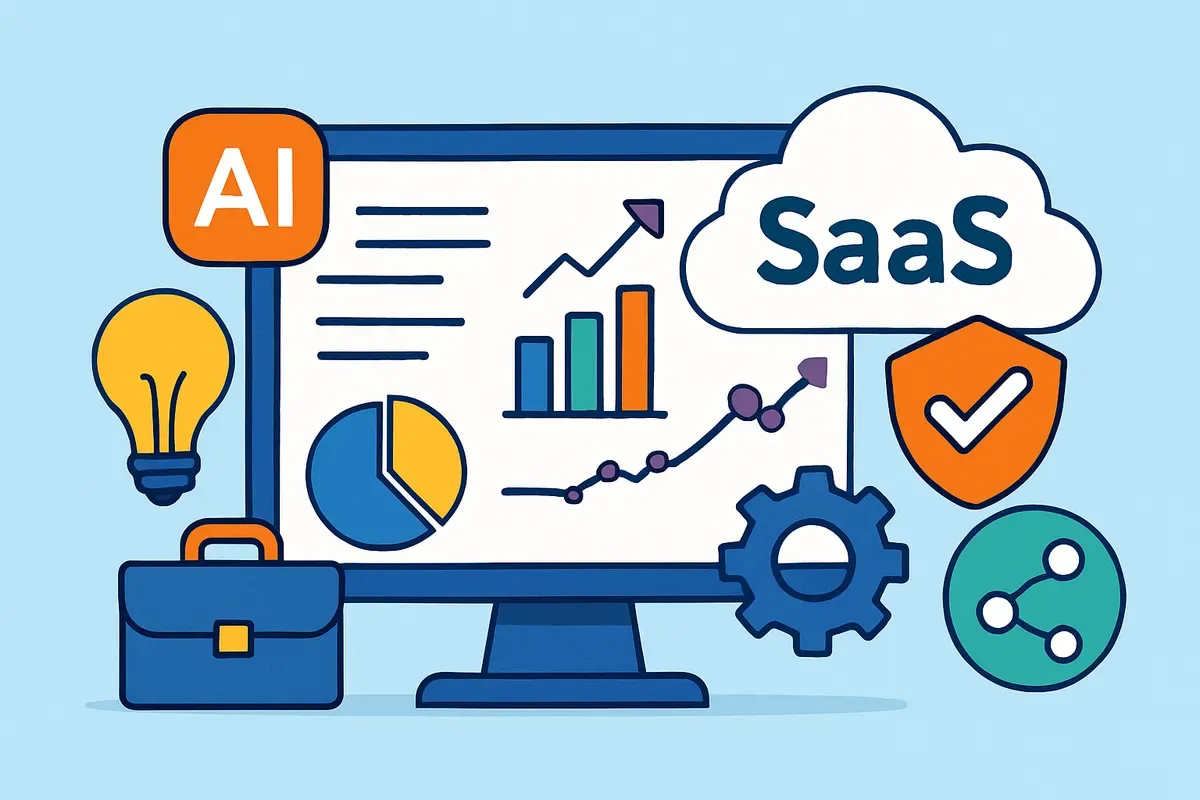
Best SaaS for small business refers to cloud-based software solutions that are specifically designed to enhance productivity, streamline operations, and manage various aspects of a small business efficiently and affordably. The best SaaS for small business is software that offers scalable, cloud-based solutions. These solutions enhance productivity and growth. Small businesses face unique challenges. Choosing the right software can be transformative. The landscape of Software as a Service (SaaS) is evolving rapidly. It's crucial to keep up with the latest trends and innovations.
In 2023, small businesses want more than just functional tools. They seek intelligent solutions that integrate seamlessly. These solutions improve operational efficiency. The right SaaS platforms empower teams and streamline operations. They offer insights that drive decision-making. The shift towards cloud-based services continues to grow. Cloud services provide flexibility, security, and cost-effectiveness. On-premise solutions often lack these benefits.
Choosing the best SaaS for small business is not just about popular options. It's about finding tools that fit your specific needs, budget, and growth strategy. This guide explores the leading SaaS solutions of this year. It provides a roadmap for small enterprises eager to thrive in a competitive landscape.
The Best SaaS for Small Business Explained
Software as a Service (SaaS) is a cloud-based solution. It provides software via the internet. This allows small businesses to access and use tools without local installation. This model is crucial for small companies seeking to enhance efficiency and drive growth.
The Benefits of SaaS for Small Businesses
SaaS solutions offer several advantages for small businesses. First, they are cost-effective. Traditional software often has hefty upfront costs. SaaS typically involves a pay-as-you-go model. This structure helps businesses manage budgets more effectively. This is critical for small companies with limited resources (source: Novo). Flexibility and scalability are other key benefits of SaaS. These tools can be accessed from anywhere with an internet connection. This offers businesses the agility needed in today’s digital world. As your business grows, many SaaS platforms can easily scale with you. They accommodate more users or additional features without major infrastructure changes.
Why SaaS is Crucial for Efficiency
Adopting SaaS solutions can greatly improve business operations. For instance, QuickBooks facilitates efficient financial management. It offers automated invoicing and accounting services. Similarly, Trello enhances project management. Its intuitive board and card system make task organization straightforward for teams (source: Taxually). By integrating these tools, businesses can streamline workflows. They reduce manual processes. Automation capabilities in many SaaS tools minimize human error. This enhances overall productivity.
Growth Opportunities with SaaS
SaaS platforms support business growth. They offer analytics and reporting functions. These help small businesses make informed decisions. Tools like Salesforce provide CRM capabilities. This helps manage customer relationships effectively. It is vital for scaling operations and increasing customer retention (source: The Benefits of SaaS). Moreover, SaaS solutions are continually updated by providers. This ensures businesses have access to the latest features and security enhancements. Ongoing development provides a competitive advantage. It enables small companies to leverage new technologies like AI to enhance operations.
Conclusion: Embracing SaaS for Business Success
For small businesses, adopting SaaS is not just a modern convenience. It's a strategic move. These tools help cut costs and improve efficiency. They provide scalability. As the marketplace becomes increasingly digital, the ability to adapt swiftly is essential. SaaS solutions offer small businesses the tools they need to thrive in a competitive environment. Embracing these technologies is a pivotal step toward sustainable growth and success.
Trending AI-Powered SaaS Tools for Small Businesses
AI-powered SaaS tools are revolutionizing small business operations. They automate processes and enhance productivity. These tools offer scalable solutions. They integrate AI into everyday business tasks. This helps small businesses compete effectively.
AI Integration in Financial Management
Financial management is becoming more efficient with AI-powered SaaS like QuickBooks. QuickBooks, as noted by Novo, is a top choice for small businesses. It streamlines accounting processes. Its AI capabilities automate invoicing, expense tracking, and financial reporting. This reduces the need for manual data entry and minimizes human error. Automation frees up valuable time for business owners to focus on strategic growth.
Enhanced Customer Relationship Management
CRM platforms such as Salesforce are incorporating AI. They provide deeper customer insights. By analyzing customer data, these tools help small businesses personalize interactions. They predict customer needs. Salesforce's AI features include predictive analytics and automated customer segmentation. These enhance marketing efforts and improve customer satisfaction.
Streamlined Project Management
Project management is simplified with AI-powered tools like Trello. Trello offers a visual task management system. It uses boards, lists, and cards to organize projects. Its seamless integration with other platforms, such as Slack and Google Workspace, makes it highly adaptable for team collaboration. According to Taxually, Trello is ideal for small teams. They need flexible and interactive solutions to manage their workflows.
Productivity and Communication
GSuite, or Google Workspace, enhances productivity. It offers AI-driven features for communication and collaboration. Its AI tools assist in email management, scheduling, and document suggestions. This enables teams to work more efficiently. This suite is essential for small businesses aiming to improve internal communication and document sharing.
AI Tools for Marketing Automation
Marketing automation is now accessible to small businesses through tools like Mailchimp. Intuit's Mailchimp uses AI to optimize email marketing campaigns. It analyzes customer behavior and segments audiences for targeted communication. This allows small businesses to deliver personalized content at scale. It increases engagement and conversion rates.
- QuickBooks automates financial management with AI for invoicing and reporting.
- Salesforce uses predictive analytics to enhance customer relationship management.
- Trello provides visual, flexible project management integrated with Slack and Google Workspace.
- GSuite boosts productivity with AI tools for communication and document collaboration.
- Mailchimp leverages AI for automated and personalized email marketing campaigns.
These AI-powered SaaS tools are not just trends. They are essential components for small businesses aiming to thrive in the digital age. By integrating AI, these solutions provide efficiency, accuracy, and competitive advantages. They enable small businesses to scale and succeed.
Top SaaS for Accounting and Financial Management
Choosing the right SaaS tool for accounting can streamline financial management for small businesses. Popular options like QuickBooks integrate AI to offer smarter financial insights.
QuickBooks: A Comprehensive Solution
QuickBooks is a leading choice for small businesses. It offers robust accounting capabilities. This SaaS tool automates financial tasks such as invoicing, tracking expenses, and managing payroll. Intuit QuickBooks is noted as a top choice for small businesses, according to a report by Novo. It’s praised for its user-friendly interface and comprehensive features.
AI Integration for Smarter Management
AI integration in accounting SaaS tools like QuickBooks facilitates data-driven decisions. AI helps analyze financial patterns, predict cash flow, and automate routine tasks. This ensures accuracy and saves time. It allows business owners to focus on growth rather than number crunching.
Benefits of Using Accounting SaaS
Adopting SaaS for accounting offers several benefits for small businesses:
- Real-time Financial Data: Access updated financial data anytime, helping in quick decision-making.
- Cost Efficiency: Reduces the need for in-house accounting personnel, saving on operational costs.
- Scalability: Easily adjusts to the growing needs of a business without needing extensive hardware upgrades.
- Security: Provides robust security features to protect sensitive financial data.
Other Notable Accounting Tools
While QuickBooks is a dominant player, there are other SaaS options worth considering:
- FreshBooks: Ideal for freelancers and small businesses, offering easy expense tracking and invoicing.
- Wave: A free tool that offers accounting, invoicing, and receipt scanning, perfect for startups.
- Xero: Known for its strong integration capabilities with other SaaS applications like Salesforce.
Choosing the Right Tool
The choice of SaaS depends on the specific needs of your business. Consider factors like the size of your operation, existing software integrations, and budget constraints. QuickBooks remains a strong contender for many. However, tools like Xero and FreshBooks might better suit niche needs. According to The SaaS Awards, tools like Levitate and vcita also offer impressive solutions. This highlights an ever-evolving SaaS landscape for small businesses. Ultimately, selecting the best SaaS for your company involves assessing how well a tool can simplify your financial management while supporting growth objectives.
Best SaaS Options for Project Management
Trello and other SaaS tools like Asana and Monday.com are ideal for small businesses needing efficient project management. These platforms offer flexibility, ease of use, and essential features that help manage tasks and improve productivity.
Trello: Visual and Intuitive
Trello stands out for its visual approach to task management. It uses boards, lists, and cards to organize projects. This makes it easy to track progress at a glance. This method is particularly appealing to small teams. They benefit from a clear and interactive interface. Trello's integration capabilities with platforms such as Slack and Google Workspace make it a versatile tool in any tech stack, as noted by Taxually.
Asana: Feature-Rich and Customizable
Asana offers a more feature-rich environment for project management. It provides timeline views, task dependencies, and workload management. These are crucial for teams handling complex projects. Asana's ability to customize workflows is a significant advantage. It is ideal for small businesses that require tailored solutions to meet specific needs.
Monday.com: Comprehensive and Collaborative
Monday.com is another excellent choice for small businesses. It combines project and work management in one platform. This enables teams to collaborate more effectively. Its customizable dashboards and automation features help streamline processes. This saves time and effort. According to Novo, platforms like Monday.com are integral for businesses aiming for cohesive team collaboration.
Emerging AI Capabilities
AI is increasingly influencing project management tools. It offers predictive analytics and automated task assignments. These capabilities help small businesses anticipate project outcomes. They optimize resource allocation. For instance, some SaaS options now use AI to suggest task priorities or detect potential bottlenecks early.
- Trello: Visual task management with board and card system.
- Asana: Rich feature set with customizable workflows.
- Monday.com: Comprehensive tool for collaboration and automation.
- AI Integration: Predictive analytics and task automation.
By leveraging these SaaS tools, small businesses can enhance project management efficiency. This ultimately leads to improved productivity and growth. For more on how AI can further future-proof your business, explore our detailed insights on popular SaaS tools and their impact.
Comparing CRM Solutions: Salesforce vs. Others
Salesforce stands out among CRM solutions for small businesses. It offers robust features and scalability. However, alternatives like Zoho CRM and HubSpot offer competitive options with unique advantages.
Features and Functionality
Salesforce offers extensive customization and advanced analytics. It is ideal for businesses poised for growth. Its AI-driven insights aid in customer engagement by predicting customer needs. Zoho CRM emphasizes ease of use with its intuitive interface and affordable pricing. It's well-suited for small businesses seeking straightforward solutions without complex setups. HubSpot CRM provides a comprehensive free tier. This makes it attractive for startups. Its integration capabilities with marketing tools can streamline operations. This provides a seamless customer journey from lead to sale.
Pricing Structure
Salesforce operates on a tiered pricing model. This allows businesses to expand functionalities as they grow. However, it can become pricey. Zoho CRM offers a more budget-friendly approach. Plans start at lower price points, making it accessible to smaller teams. HubSpot's free CRM is a significant draw. Paid tiers add advanced features like reporting and automation. This flexibility allows businesses to start with minimal cost and scale as necessary.
AI and Automation Capabilities
Salesforce's Einstein AI provides powerful automation and predictive analytics. This helps businesses manage customer relationships more effectively. It can be a game-changer for small businesses looking to leverage big data. Zoho CRM includes AI capabilities through Zia. It offers insights and workflow automation. While not as comprehensive as Salesforce's AI, it provides valuable automation for routine tasks. HubSpot's AI tools focus on marketing automation. This can simplify customer acquisition. Its AI features are less about analytics and more about enhancing customer interactions.
Comparison Table
| CRM Solution | Key Features | Starting Price | AI Capabilities |
|---|---|---|---|
| Salesforce | Highly customizable, advanced analytics | $25/user/month | Einstein AI for predictive analytics |
| Zoho CRM | Intuitive interface, affordable pricing | $12/user/month | Zia AI for workflow automation |
| HubSpot CRM | Comprehensive free tier, marketing integration | Free | AI for marketing automation |
Choosing the Right CRM
For small businesses, the choice of CRM depends on specific needs and budget constraints. Salesforce is ideal for those requiring scalable, robust solutions. It focuses on data-driven decision-making. In contrast, Zoho CRM offers a cost-effective, user-friendly option for smaller teams. HubSpot CRM is perfect for startups. It integrates marketing and sales efforts without an upfront investment. According to a report by Novo, Salesforce is among the top SaaS providers. It stands alongside QuickBooks and Trello. This highlights its popularity and reliability in the small business sector. Ultimately, the best CRM solution for any business will balance functionality, cost, and ease of use to meet their specific operational needs. If you want to go deeper, see Top SaaS Email Services with Best Customer Support.
Future-Proofing Your Business with AI-Driven SaaS
To future-proof small businesses, leveraging AI-driven SaaS tools is crucial. These tools help businesses stay competitive and adapt to rapid technological changes.
Staying Competitive with AI
AI-driven SaaS tools offer small businesses the ability to process large amounts of data quickly. This helps in making informed decisions faster than traditional methods. For example, incorporating AI into customer service through chatbots can enhance customer engagement. It reduces response times. AI tools can analyze customer interactions and suggest improvements. This leads to better service and increased customer satisfaction.
Adapting to Technological Shifts
As technology evolves, businesses must adapt to survive. AI-driven SaaS solutions help small businesses stay ahead of the curve. They automate routine tasks. Tools like Trello, mentioned by Taxually, integrate with AI to streamline project management. By automating workflows, small businesses can focus more on strategic growth rather than mundane tasks.
AI for Financial Management
AI-powered financial SaaS tools such as QuickBooks provide real-time insights into financial data. According to Novo, QuickBooks is a popular choice among small businesses. It offers robust features and ease of use. AI can automate tasks like invoicing and expense tracking. This reduces human error and frees up time for business owners to focus on scaling their operations.
Cost-Efficiency and Resource Management
Implementing AI-driven SaaS can also be cost-effective. Small businesses often have limited resources. AI tools can optimize these by reducing the need for a large workforce. For instance, The SaaS Awards recognize tools like Levitate. They offer solutions tailored to small teams. By using AI, businesses can operate more efficiently without expanding their workforce.
Preparing for Future Growth
AI-driven SaaS empowers small businesses to scale efficiently. These solutions are designed to grow with your business. They provide the flexibility to add features as needed. This scalability ensures that small businesses can handle increased demand without major disruptions. By future-proofing operations today, small businesses can ensure long-term success. They remain competitive in a rapidly changing market. Leveraging AI-driven SaaS tools is not just about keeping up. It’s about setting the pace. With the right tools, small businesses can transform potential challenges into opportunities for growth and innovation.
Choosing the Right SaaS for Your Small Business
Selecting the best SaaS for your small business involves evaluating your specific needs, budget, and growth goals. To make an informed decision, consider several critical factors.
Identify Your Business Needs
Start by assessing the core functions your business requires. For instance, if your priority is financial management, consider tools like QuickBooks. It is a favorite among small businesses for accounting, according to Novo's report on popular SaaS options. If managing tasks and projects more visually is essential, Trello could be an ideal choice. It is highlighted by Taxually for its simple, interactive interface.
Evaluate Cost vs. Benefits
Budget constraints are a reality for small businesses. Look for SaaS tools that offer a balance between cost-effectiveness and essential features. Products like vcita are recognized for their ease of use and cost-effectiveness. They even win accolades at the SaaS Awards for understanding small team dynamics.
Consider Growth and Scalability
Choose SaaS solutions that can grow with your business. A tool that serves your business today must accommodate future expansion. Salesforce, for instance, offers scalable CRM solutions. They can grow alongside your customer base. It’s vital to select platforms that won’t limit you as you expand.
Integration Capabilities
Ensure the SaaS tools you choose can integrate well with other applications you use. Seamless integration with software like Slack or Google Workspace can enhance productivity. Trello’s ability to integrate with these platforms makes it a versatile choice for diverse operational needs.
Trial and Support Options
Opt for SaaS providers offering trial periods and robust customer support. Free trials allow you to test the tool’s functionality and suitability for your business. Customer support, whether through chat or phone, can be crucial. It is important when you encounter technical issues or need assistance. Selecting the right SaaS for your small business involves looking beyond immediate needs. Consider the broader picture of costs, scalability, integration, and support. This holistic approach ensures that your investment in software leads to efficiency and growth.
Frequently Asked Questions
What is SaaS and why is it important for small businesses?
SaaS, or Software as a Service, provides cloud-based applications accessible via the internet. It's important for small businesses because it reduces the need for expensive hardware and IT maintenance, allowing them to focus on growth.
How can AI enhance SaaS applications for small businesses?
AI can enhance SaaS applications by automating tasks, providing predictive analytics, and improving customer interactions. This helps small businesses save time and make data-driven decisions.
What are the top SaaS tools for accounting and finance management?
Some of the top SaaS tools for accounting and finance management include QuickBooks Online, Xero, and FreshBooks. These tools offer features like invoicing, expense tracking, and financial reporting.
How do I choose the right SaaS tool for my business needs?
To choose the right SaaS tool, assess your specific business requirements, budget, and scalability needs. Additionally, consider user-friendliness and customer support when making your decision.
Making the Right Choice for Your Business
Selecting the best SaaS solutions can transform small businesses. They enhance efficiency and reduce costs. Each tool has unique strengths. Whether it's for project management, customer relationship management, or accounting, prioritize what suits your business needs today. For those looking to integrate AI, consider exploring the Best AI Tools for Business Productivity. These tools can further streamline operations and boost your workforce's effectiveness. Ready to drive your business forward? Start a free trial of a top SaaS tool now to see how it can benefit your operations. For continued insights, check out our guides on the Top Free AI Tools for Office Work in 2026 and Best AI Tools for Work: Top Picks for 2024 Productivity.