
Ultimate Guide to AI in Healthcare: Insights and Applications
Discover the comprehensive guide to AI in healthcare, exploring its transformative impact, diverse applications, and future trends shaping the industry.

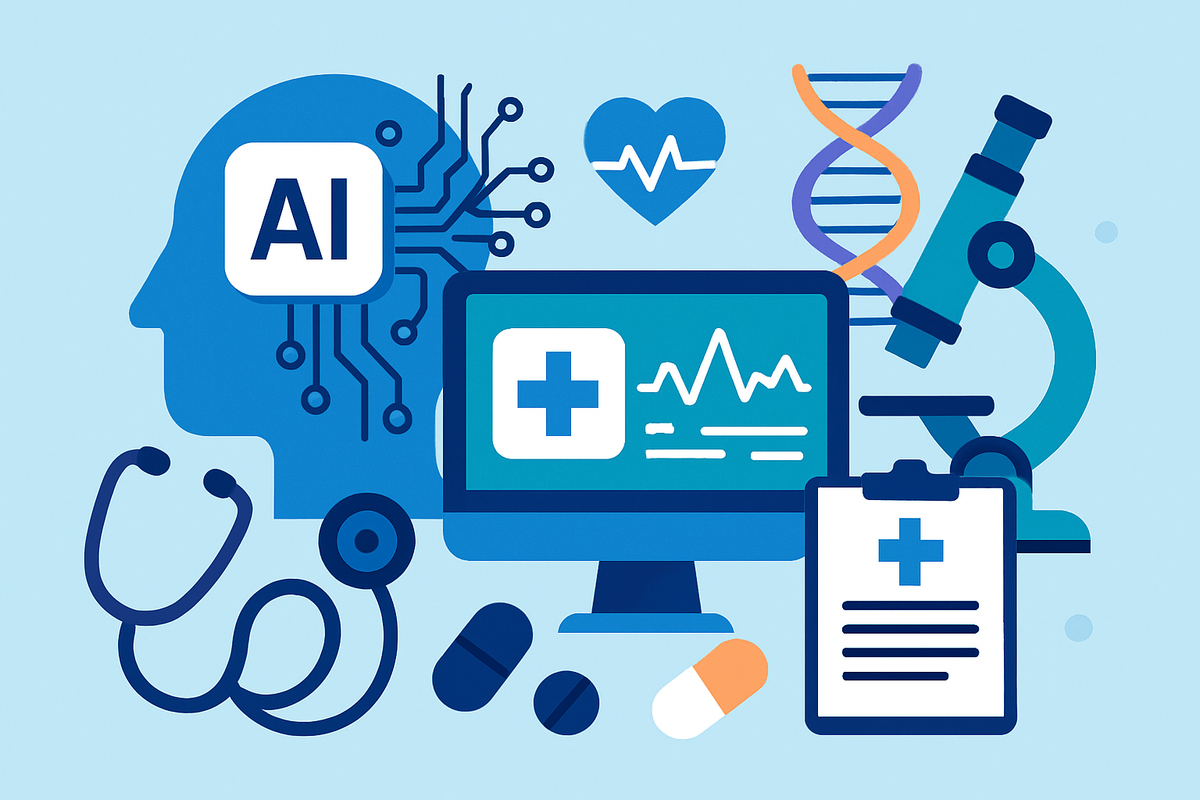
A guide to AI in healthcare is a detailed roadmap for integrating artificial intelligence technologies into medical practices and systems.
Healthcare systems today face big challenges. Managing patient data and streamlining operations is tough. AI can help solve these problems. By using machine learning and data analytics, healthcare can improve diagnostics and patient care. It can also cut costs. This guide to AI in healthcare shows these possibilities. It offers a strategic look at future trends and practical uses.
As AI technologies improve, their role in healthcare becomes essential. Predictive analytics help doctors foresee patient outcomes. Natural language processing makes documentation easier. But adopting AI needs careful planning. In this guide, we explore how to effectively use AI in healthcare. This helps professionals stay innovative.
Guide to AI in Healthcare Explained
AI in healthcare is a tool that improves patient care and supports decision-making. By using predictive analytics and data insights, AI boosts efficiency and patient outcomes.
AI's Role in Clinical Decision-Making
AI helps healthcare professionals by providing insights from large datasets. These insights help diagnose diseases and suggest treatments. According to the AI in Healthcare Guide, AI tools can quickly analyze imaging data. This speeds up diagnosis and improves patient outcomes.
Enhancing Patient Care
AI improves patient care with tailored treatments and real-time monitoring. Virtual assistants help manage appointments and medication reminders. According to AI in Healthcare: The Ultimate eGuide, AI helps in radiology by ensuring fast communication. This reduces wait times and improves care.
Streamlining Administrative Tasks
AI cuts down on administrative tasks, freeing up healthcare professionals. Automated data entry and billing reduce errors and boost efficiency. As noted in the AI in Healthcare: The Ultimate eGuide, AI systems manage patient flow, optimizing resources.
Predictive Analytics in Healthcare
Predictive analytics is key in AI healthcare. By analyzing data, AI forecasts trends and outbreaks. This helps public health and hospital planning. The AI in Healthcare: Applications and Impact shows how predictive models help manage hospital capacity.
Data Integration for Better Outcomes
AI integrates diverse data sources for a full view of patient health. This enhances personalized medicine, tailoring treatments to individuals. As per AI in Healthcare: The Ultimate eGuide, integrated data systems improve diagnostics and treatment accuracy, leading to better outcomes. AI in healthcare is not just a future idea; it's a practical solution today. It enhances decision-making, patient care, and efficiency. As technology evolves, AI will keep transforming healthcare, offering more personalized and efficient services.
Current Applications of AI in Healthcare
AI is already making big changes in healthcare by improving patient care and operations. Through predictive analytics and virtual assistants, healthcare systems are transforming.
Predictive Analytics in Patient Care
Predictive analytics, powered by AI, changes patient care by predicting health issues early. By analyzing data, AI suggests personalized treatments. According to the AI in Healthcare Guide, this allows early interventions, crucial for managing chronic diseases.
Virtual Assistants and Patient Engagement
Virtual assistants improve patient engagement and reduce admin work. These AI tools offer 24/7 support for appointments and medication reminders. As noted in the AI in Healthcare: The Ultimate eGuide, they enhance communication between patients and providers.
Enhanced Patient Management
AI optimizes patient management, especially in emergencies. AI helps triage and prioritize cases, ensuring quick attention. Fast processing of medical images aids diagnosis and treatment, reducing hospital stays. This is highlighted in resources like the Artificial Intelligence in Healthcare: Transforming the Practice.
- AI models foresee health crises before they occur.
- Virtual assistants provide continuous support and reduce clerical work.
- AI streamlines triage, improving emergency care.
- Patient management tools optimize hospital workflows.
Data Integration for Clinical Decision Support
AI integrates diverse data sources, helping clinicians make informed decisions. By combining health records and lab results, AI offers insights into patient health. This supports tailored treatments and precise diagnoses, according to Artificial Intelligence in Healthcare - Wikipedia. AI in healthcare is no longer speculative. It offers practical solutions to challenges. Through predictive analytics and virtual assistance, AI transforms healthcare delivery, making it more efficient and patient-centered.
Ethical Considerations in AI Deployment
AI in healthcare follows ethical principles like autonomy, beneficence, non-maleficence, and justice. These ensure AI aligns with values prioritizing patient welfare and equity.
Autonomy in Data and Decision-Making
Respect for autonomy means individuals control their data and decisions. Patients should know and consent to AI data use. According to the U.S. Department of Health and Human Services, patient consent is ongoing, not one-time (source: Artificial intelligence in healthcare - Wikipedia).
Beneficence in Healthcare Outcomes
Beneficence focuses on AI improving outcomes and processes. AI should enhance care, aiding decisions with predictive analytics. For example, AI streamlines operations, as highlighted in the AI in Healthcare Guide. This principle requires AI to be tested and validated to benefit health.
Non-Maleficence: Do No Harm
Non-maleficence means avoiding harm through AI. AI must minimize errors and biases in diagnosis or treatment. As outlined by the AI in Healthcare: The Ultimate eGuide, AI's role in triaging needs checks to prevent misdiagnoses.
Justice in Healthcare Access
Justice involves fair access to AI across patient groups. AI should not worsen disparities but reduce them. Developers must consider social health factors and ensure AI tools are inclusive and accessible (source: AI in Healthcare: The Ultimate eGuide).
Balancing Innovation and Ethics
Incorporating ethics requires balancing innovation and responsibility. Continuous monitoring of AI tools is necessary. The rapid evolution of AI demands collaboration to uphold standards. According to the AI in Healthcare Guide, guidelines from organizations support ethical AI deployment. By following these principles, providers can use AI responsibly. This ensures AI advancements benefit patient care and systems.
Benefits of AI for Healthcare Providers and Patients
AI in healthcare offers big benefits like streamlined operations and better patient engagement. These improve efficiency and care quality for providers and patients.
Streamlining Operations
AI enhances operational efficiency in healthcare. By automating tasks, AI reduces staff workload. According to AI in Healthcare Guide, predictive analytics optimize scheduling and resources. This lets providers focus on patient care.
Enhancing Patient Care
AI supports decision-making by analyzing data. It helps diagnose diseases by reviewing records and images. According to sources like the PMC article, AI prioritizes cases for faster intervention, ensuring timely care.
Improving Patient Engagement
AI-driven virtual assistants improve patient interaction by offering 24/7 support. They provide advice, reminders, and scheduling. Patients enjoy autonomy by accessing services on their terms. The AI in Healthcare: The Ultimate eGuide shows how assistants streamline communication.
Supporting Clinical Decision-Making
AI aids decision-making with predictive analytics. By analyzing data patterns, AI predicts health issues and suggests measures. This helps providers manage care effectively. According to a report from the AI in Healthcare Guide, this improves outcomes and safety.
Key Benefits at a Glance
- Reduces administrative burdens for staff.
- Enhances accuracy in diagnosing and treating.
- Improves patient engagement and satisfaction.
- Enables proactive healthcare through analytics.
- Facilitates better resource management.
Overall, AI in healthcare offers transformative benefits, enhancing efficiency and care quality. By streamlining operations and fostering engagement, AI addresses critical challenges, paving the way for a responsive healthcare environment.
AI Technologies Transforming Healthcare
AI technologies like machine learning (ML) and natural language processing (NLP) are key in transforming healthcare. They enhance care and streamline operations by integrating data and supporting decisions.
Machine Learning in Healthcare
Machine learning is vital for predictive analytics. It analyzes large datasets to predict outcomes, aiding proactive care. According to the AI in Healthcare Guide, ML detects patterns in data, improving diagnosis and treatment. This reduces professionals' workload by automating tasks.
Natural Language Processing
NLP helps computers understand human language. In healthcare, it processes clinical documentation, extracting insights to improve care. As reported by AI in Healthcare: The Ultimate eGuide, NLP manages health records, allowing quick information retrieval.
Robotic Process Automation
Robotic Process Automation (RPA) automates routine tasks in healthcare. It helps with scheduling, data management, and billing. RPA boosts efficiency and reduces admin burdens, letting providers focus on care.
Computer Vision
Computer vision analyzes medical images, enhancing diagnostic accuracy. It helps radiologists identify abnormalities in scans, according to Artificial Intelligence in Healthcare. This technology speeds up diagnosis, improving outcomes.
Comparison of AI Technologies in Healthcare
| AI Technology | Primary Role in Healthcare | Benefits |
|---|---|---|
| Machine Learning | Predictive analytics | Improves disease diagnosis and treatment plans |
| Natural Language Processing | Interpreting clinical data | Efficient management of electronic health records |
| Robotic Process Automation | Automating administrative tasks | Reduces operational costs and errors |
| Computer Vision | Image analysis | Enhances diagnostic accuracy |
These AI technologies are key to modern healthcare, providing a foundation for better care and efficiency. As AI evolves, its applications will expand, offering new solutions to challenges.
Future Trends of AI in Healthcare
The future of AI in healthcare promises more personalized treatments and efficient workflows. But it poses challenges in data privacy and integration. As technology advances, AI will continue to shape healthcare delivery.
Personalized Medicine
AI will enhance personalized medicine by analyzing genetic data for tailored treatments. Machine learning evaluates datasets to predict responses to medications. This allows for treatments that improve outcomes and reduce side effects. According to the AI in Healthcare Guide, integrating AI with genetic data is key in customizing care.
Integration with IoT Devices
AI with Internet of Things (IoT) devices enables real-time health monitoring. Wearables collect health data, allowing AI to analyze and predict issues. This helps providers offer timely interventions. The AI in Healthcare Guide highlights IoT and AI's role in preventive care.
AI-Driven Diagnostics
AI-driven diagnostics will change disease identification. Machine learning analyzes images more accurately and quickly than traditional methods. This enhances radiology by prioritizing critical cases. The AI in Healthcare: The Ultimate eGuide states AI's role in streamlining radiology reduces hospital stays and improves care.
Telemedicine and Virtual Health Assistants
Telemedicine, boosted by AI, will provide smarter virtual assistants for patient engagement. These assistants help manage chronic conditions and medication schedules, enhancing experience. In a world relying on remote healthcare, these systems are crucial.
Challenges in Data Security and Ethics
As AI progresses, ensuring data security and ethical use is vital. Protecting data while ensuring ethical deployment is a big challenge. According to Artificial Intelligence in Healthcare - Wikipedia, following ethical principles is necessary to maintain trust and effectiveness.
Conclusion
AI's future in healthcare offers opportunities for better care and efficiency. But addressing data privacy and ethics is vital. As AI evolves, its integration with new technologies will shape a transformative healthcare landscape.
Frequently Asked Questions
What is AI's role in healthcare?
AI is used in healthcare to analyze data, enhance diagnostic accuracy, and streamline administrative tasks. It assists in decision-making processes and personalizes patient treatment plans.
How is AI improving patient care?
AI improves patient care by providing predictive analytics, which can anticipate health issues before they arise. It also facilitates remote monitoring and telemedicine, allowing for more timely interventions.
What are the ethical concerns with AI in healthcare?
Ethical concerns include data privacy, potential biases in AI algorithms, and the need for transparency in AI decision-making. There's also the worry about the displacement of healthcare jobs due to automation.
What future trends are expected in AI healthcare solutions?
Future trends include the integration of AI with wearable technology for real-time health monitoring and advancements in personalized medicine. Additionally, there is expected growth in AI-driven diagnostic tools and enhanced patient engagement platforms.
The Path Forward for AI in Healthcare
The integration of AI in healthcare offers immense potential to enhance patient outcomes and streamline clinical processes. From diagnostic precision to personalized treatment plans, AI provides transformative capabilities. However, challenges like data privacy and integration hurdles remain. As healthcare providers and technologists, it's crucial to stay informed and agile in this evolving landscape.
To fully leverage AI's potential, consider exploring resources such as AI in Business for strategic insights and Future Technology Predictions to anticipate upcoming trends. Engage with comprehensive guides like AI Technology Explained to deepen your understanding.
Your journey with AI can begin today. Start by evaluating current systems, educating your team, and experimenting with pilot projects. The future of healthcare depends on our ability to adapt and innovate.