
AI Technology Overview for Beginners: A Guide to the Future
Explore our comprehensive AI technology overview for beginners, covering essential uses, future implications, and key trends shaping the tech landscape today.

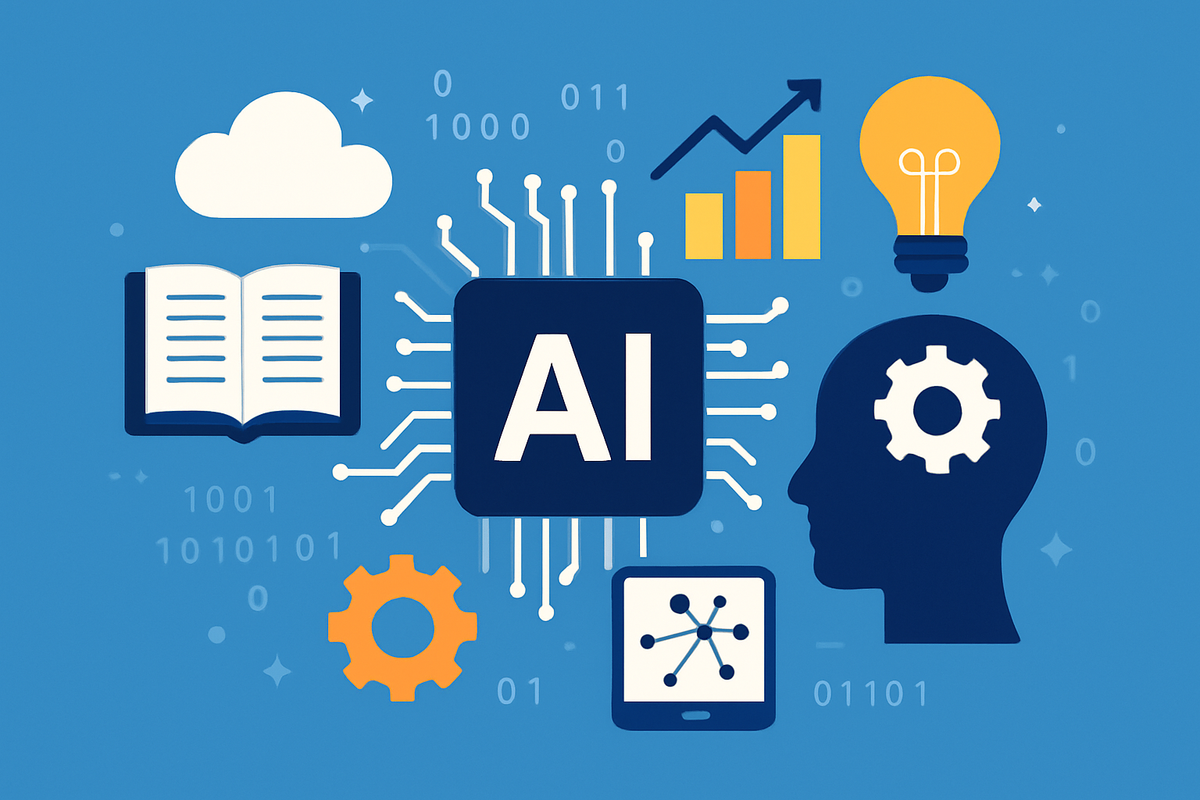
AI Technology Overview for Beginners: A Guide to the Future
AI Technology Overview for Beginners: A Guide to the Future
AI Technology Overview for Beginners: The Revolution Unveiled
Artificial Intelligence (AI) is reshaping the technological landscape, promising transformative potential across industries. AI enables machines to perform tasks that typically require human intelligence, such as understanding language and making decisions. Integrating AI into everyday technology not only offers new functionalities but also sets the stage for future advancements.
In this article, we will provide an AI technology overview for beginners, unpacking its core concepts and discussing how these technologies are becoming a staple in modern infrastructure.
Understanding AI: The Basics
What is AI?
AI, or Artificial Intelligence, involves creating systems that can perform tasks requiring human-like intelligence. Key components of AI include machine learning and neural networks, enabling machines to learn from data, adapt, and improve over time.
For beginners, starting with simple projects like chatbots or data analysis tools can provide foundational understanding and hands-on experience. According to Learning Tree, these basic projects are excellent starting points for anyone interested in AI.
AI is a continuously evolving field, with new methods and applications emerging regularly. This dynamic nature requires a commitment to ongoing learning and adaptation. Beginners are encouraged to engage with online courses and workshops to deepen their understanding of AI methodologies.
Moreover, understanding the historical context of AI development can provide valuable insights. From its inception in the 1950s to the present day, AI has undergone significant transformations. These shifts reflect both technological advancements and changing societal needs.
How Does AI Work?
AI systems learn by processing large datasets, identifying patterns, and making predictions or decisions based on this data. Machine learning, a subset of AI, uses algorithms to parse data, learn from it, and make determinations or predictions without being explicitly programmed to perform the task.
The learning process in AI involves several key stages: data collection, data preprocessing, model training, and evaluation. Each stage is crucial in developing accurate and reliable AI systems. Beginners should focus on understanding these stages to appreciate the complexity of AI development.
Understanding different machine learning algorithms is essential for grasping AI operations. Algorithms like decision trees, neural networks, and support vector machines each have unique advantages and limitations. Exploring these algorithms helps beginners identify the best tool for their specific needs.
Types of AI
- Narrow AI: Specialized in a single task, such as facial recognition or language translation.
- General AI: A theoretical form of AI that understands and learns any intellectual task a human can do.
- Superintelligent AI: An AI that surpasses human intelligence, also theoretical at present.
Practical Applications of AI in Technology
AI in Everyday Technology
AI is already embedded in many technologies that we use daily. From virtual assistants like Siri and Alexa to recommendation engines on Netflix and Spotify, AI enhances user experiences by providing personalized and efficient interactions.
As reported by various sources, AI is also being used in customer service applications to ground data effectively, preventing inaccuracies and biases from affecting the customer experience.
In addition to consumer applications, AI is playing a crucial role in optimizing business operations. Companies are leveraging AI to streamline supply chains, improve logistics, and enhance customer relationship management. These applications demonstrate AI's versatility and potential to revolutionize industries.
The impact of AI on education is also noteworthy. Educational technologies are using AI to offer personalized learning experiences. By analyzing student data, AI can identify learning gaps and suggest tailored educational resources, making learning more effective and engaging.
AI in Industry
- Healthcare: AI assists in diagnostics and personalized medicine.
- Finance: AI algorithms help detect fraudulent activities and manage financial portfolios.
- Automotive: AI powers autonomous vehicles, enhancing safety and efficiency.
AI is transforming manufacturing through automation and predictive maintenance. By analyzing machine performance data, AI can predict equipment failures before they occur, reducing downtime and maintenance costs. This proactive approach enhances efficiency and productivity.
In agriculture, AI is being utilized to improve crop yields and manage resources. Precision agriculture uses AI-powered sensors and drones to monitor field conditions, optimize irrigation, and control pests. These advancements help farmers increase sustainability and food production.
Ethical Considerations and Challenges
Data Privacy
AI systems often require vast amounts of data, raising concerns over data privacy and sovereignty. Users need to be cautious about sharing personal information, as some models use inputs for further training. This can lead to privacy breaches if not properly managed.
Organizations must prioritize data protection by implementing robust security protocols. Regulatory frameworks like GDPR and CCPA are essential in guiding companies to manage data responsibly. Understanding these regulations is crucial for beginners involved in AI projects.
Developers should also consider ethical implications when designing AI systems. Transparency and accountability in AI decision-making processes are paramount. By ensuring AI systems are interpretable and explainable, developers can build trust and address ethical concerns effectively.
Bias and Fairness
AI models can inherit biases present in their training data, leading to skewed or unfair outcomes. Ensuring that AI systems are trained on diverse and unbiased datasets is critical to mitigating these risks.
To address bias, developers should employ techniques such as data augmentation and model adjustments. These strategies help create more balanced and fair AI outcomes. Ensuring diversity among development teams can also reduce bias in AI systems.
Regular auditing and monitoring of AI systems are necessary to detect and correct biases. Implementing feedback loops where users can report biases helps improve AI fairness over time. Organizations must be proactive in fostering an inclusive AI environment.
Model Inaccuracy
AI sometimes generates incorrect information that sounds plausible, known as 'hallucinations'. Developers must implement safeguards to verify AI outputs and maintain accuracy.
Testing AI models extensively before deployment can minimize inaccuracies. By using diverse scenarios and datasets during testing, developers can enhance model robustness. Collaboration with domain experts also aids in refining AI accuracy.
Creating feedback mechanisms allows users to report errors and inaccuracies in AI outputs. This continuous feedback loop facilitates ongoing model improvements, ensuring accuracy and reliability in AI applications.
Future Trends in AI
Generative AI
Generative AI is gaining traction, creating content such as text, images, and music that mimics human creation. Tools like OpenAI's GPT-3 have set new benchmarks in this field, with applications ranging from content creation to enhancing virtual interactions.
The potential of generative AI extends to fields like entertainment and design. By generating realistic simulations and prototypes, AI can accelerate creative processes. Artists and designers are increasingly collaborating with AI to push creative boundaries and explore novel concepts.
Generative AI also holds promise in education, where it can create immersive learning experiences. By simulating historical events or scientific phenomena, AI-generated content can enhance understanding and engagement in educational settings.
AI in Edge Computing
As processing power increases, AI is moving to the edge, operating on devices rather than in centralized data centers. This shift allows real-time data processing, crucial for applications like autonomous vehicles and smart home devices.
Edge computing reduces latency, enabling faster decision-making in time-sensitive applications. For instance, in healthcare, real-time patient monitoring using AI at the edge can lead to immediate interventions, improving patient outcomes.
The decentralization of AI processing also enhances data privacy, as sensitive information can be processed locally without being transmitted to cloud servers. This approach aligns with emerging privacy regulations and consumer expectations.
Frequently Asked Questions
What are the basic types of AI?
The basic types include Narrow AI, which focuses on specific tasks, General AI, which is theoretical and could perform any intellectual task, and Superintelligent AI, which is also theoretical and surpasses human intelligence.
How does AI learn?
AI learns through machine learning, which uses algorithms to process data, identify patterns, and make decisions or predictions based on the data.
What are common uses of AI today?
Common uses include virtual assistants, recommendation engines, and customer service applications.
Embrace the AI Evolution
As AI technology continues to evolve, understanding its fundamentals is key to leveraging its potential. Whether you're developing a simple chatbot or exploring the vast possibilities of machine learning, AI offers tools that can transform how we interact with technology.
For those eager to dive deeper, explore industry guides and educational resources to stay ahead in the rapidly advancing world of AI. Engage with our community by sharing your thoughts on how AI changes the technology landscape and navigate the trends shaping tomorrow's innovations.