
AI Technology for Smart Homes: Transforming Everyday Living
Discover how AI technology for smart homes is transforming daily living with enhanced automation, improved efficiency, and unparalleled convenience for homeowners.

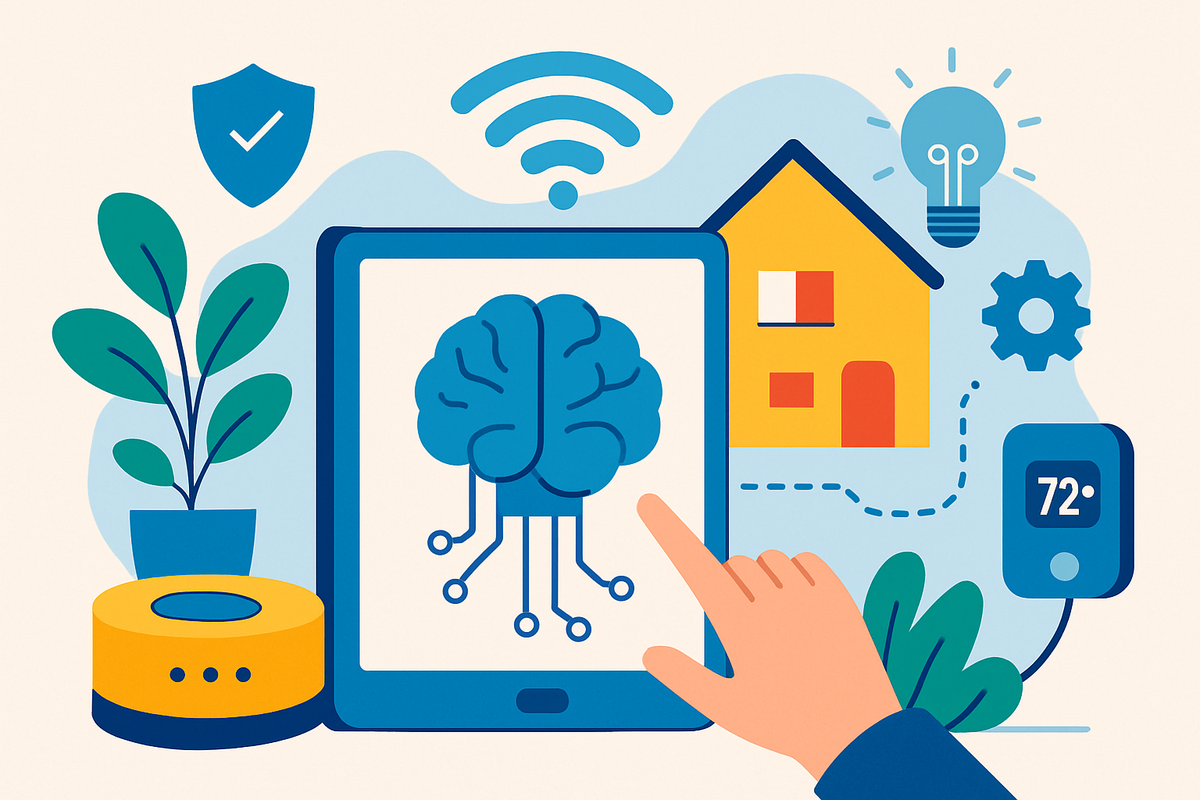
AI technology for smart homes refers to the integration of artificial intelligence systems into household devices and appliances to enhance automation, improve energy efficiency, and provide personalized user experiences. AI technology for smart homes uses artificial intelligence to improve home automation. It makes daily life better with smart devices and systems. Imagine a home that knows what you need—lights that change when you enter, thermostats that adjust for comfort, and security systems that learn your routine.
This technology is more than a new trend. It aims to change comfort and efficiency in our homes. Smart home AI fits into existing systems, offering experiences that change with user behavior. The convenience is just the start.
As AI in smart homes grows, it changes how we interact with our homes. It can reduce energy use and improve security. The possibilities are vast. Exploring AI in smart homes is not just interesting but necessary for future living. Trends show a future where smart homes are not just smart—they're intuitive.
Introduction to AI Technology for Smart Homes
AI technology for smart homes is changing how we manage our living spaces. It automates tasks and improves comfort with smart systems. These systems use AI to control devices like lights, heating, and security. They learn from user habits to make life easier and more efficient.
Automating Daily Tasks
AI in smart homes uses machine learning to simplify daily tasks. For example, AI lighting systems adjust brightness and color based on time or presence. This reduces the need for manual changes. According to Intuz, these systems learn user preferences and make smart decisions (source: Intuz).
Enhancing Lifestyle Comfort
AI smart homes do more than automate tasks. They improve living standards by personalizing the environment. AI systems predict needs and adjust settings. For example, smart thermostats learn schedules and preferences, optimizing temperature for comfort and energy savings (source: HONOR SA). This creates a seamless living experience where the home responds intuitively.
Improving Energy Efficiency
A key benefit of AI in smart homes is energy savings. AI systems use data to reduce energy use without losing comfort. Smart appliances can run during off-peak hours, lowering bills and environmental impact. AI balances efficiency with convenience.
Enhancing Security Measures
AI boosts home security. AI-powered cameras and alarms can tell the difference between normal and unusual activities. They alert homeowners to unexpected movements or unfamiliar faces. These systems use advanced algorithms to enhance security without constant monitoring, making them essential in modern smart homes (source: HData Systems).
Seamless Integration and Communication
AI in smart homes allows devices to communicate smoothly. Systems like smart assistants help devices interact, creating a unified ecosystem. Users can control multiple systems with voice commands or automated actions, making technology more accessible and intuitive (source: CEDIA). AI technology in smart homes offers more than convenience. It transforms residential life by making environments more responsive and efficient. By understanding human habits, AI enhances comfort and security and manages resources smartly. As these technologies evolve, they promise to make homes more intuitive and eco-friendly.
Core Components of AI Smart Homes
AI technology for smart homes automates and manages household systems efficiently. It uses machine learning, automation, and IoT devices for seamless control over home environments.
Machine Learning
Machine learning is key in AI smart homes. It helps devices learn from user behavior and adapt. By analyzing user activity, systems can anticipate needs and adjust settings automatically. This increases convenience and personalizes home experiences. According to HONOR SA, this technology allows smart homes to work with minimal human help.
Automation Systems
Automation systems in AI smart homes use advanced algorithms to manage devices like lights and thermostats. These systems perform tasks based on conditions or user habits. The Intuz blog says automation simplifies routines and improves energy efficiency by optimizing device use.
Internet of Things (IoT) Devices
IoT devices are vital in AI smart homes. They connect devices to the internet, enabling communication and control. Through IoT, homeowners can manage devices remotely using phones or voice commands. This ensures devices respond in real-time to commands or changes, as noted by CEDIA.
Voice Assistants
Voice assistants like Amazon Alexa and Google Assistant are crucial in AI smart homes. They let users interact with home systems verbally. These assistants use AI to understand commands, making it easier to control home aspects without manual input. Intuz highlights that voice assistants enhance convenience with hands-free operation.
Data Analytics
Data analytics is crucial in AI smart homes. It processes data from devices to refine operations and improve decisions. By using data analytics, smart homes understand user preferences better and optimize performance, according to HDATA Systems.
Security Systems
AI-enhanced security systems make homes safer with advanced monitoring and alerts. They use AI to detect unusual activity and notify homeowners of threats. Automation improves security by enabling remote surveillance and control.
- Machine Learning: Adapts to behavior, learns, and anticipates needs.
- Automation Systems: Streamlines tasks and boosts energy efficiency.
- IoT Devices: Facilitates connectivity and control over devices.
- Voice Assistants: Allows easy, hands-free management.
- Data Analytics: Interprets data to optimize operations.
- Security Systems: Provides advanced monitoring and alerts.
AI technology in smart homes enhances automation and customization, improving life quality. By integrating these components, smart homes become more intelligent and responsive to residents' needs.
Benefits of AI-Powered Smart Homes
AI technology in smart homes offers significant benefits. It enhances energy efficiency, security, and user convenience. These advantages come from AI's ability to automate and optimize home systems, adapting to user preferences.
Energy Efficiency
AI-powered smart homes excel in energy efficiency. They learn usage patterns and adjust consumption. According to Intuz, AI can automate heating and cooling, reducing waste by operating only when needed. Smart lighting adjusts based on occupancy and natural light, cutting costs. Advanced sensors and AI algorithms optimize energy use without manual input.
Enhanced Security
Security in AI smart homes is improved with intelligent systems. AI analyzes footage in real time, detecting unusual activities and alerting homeowners. According to Honor, AI security systems differentiate between normal and suspicious behavior, reducing false alarms. They integrate with other smart devices for comprehensive security.
User Convenience
Convenience is a hallmark of AI-powered smart homes. AI systems integrate devices for centralized control. Voice-activated assistants provide hands-free operation, letting users control lights and appliances with voice commands. According to HDATA Systems, AI homes learn preferences, automating tasks like adjusting thermostats.
Advanced Automation
AI enhances smart home automation. Devices anticipate needs, like pre-heating ovens or adjusting lights. This relies on machine learning to predict and respond to habits. CEDIA states these systems reduce manual adjustments, making life seamless.
Seamless Integration
AI integration allows a unified ecosystem where devices work together. Systems share data to improve functionality. For example, a thermostat can use motion sensor data to optimize heating. This interaction enhances user experience and maximizes smart home benefits.
- AI optimizes energy by learning and adjusting to habits.
- Smart security enhances safety with real-time detection.
- Convenience improves with centralized control and voice assistants.
- Automation anticipates needs, reducing manual tasks.
- Devices integrate seamlessly, creating a unified ecosystem.
AI in smart homes transforms living by providing smarter, efficient, and secure environments. As technology advances, the potential for greater benefits grows, making AI homes attractive for improving living spaces.
Comparing AI Smart Home Devices and Systems
AI smart home devices and systems vary in features and functions. From voice assistants to home automation hubs, these technologies enhance convenience and security while reducing energy use.
Voice Assistants: The Gatekeepers
Voice assistants like Amazon Alexa, Google Assistant, and Apple Siri control many AI smart homes. They let users manage systems with voice commands. According to Intuz, they automate tasks like setting alarms or adjusting lights. Their ability to learn preferences increases their utility over time.
Comprehensive Systems: The All-in-Ones
Systems like Samsung SmartThings or Apple HomeKit offer more than voice control. They integrate multiple devices under one platform, managing lighting, security, and appliances. As HONOR SA notes, these systems allow extensive automation and data-driven management.
Security Devices: The Watchful Eyes
AI security systems, such as Ring or Nest, offer advanced monitoring with facial recognition and motion detection. These features improve safety, alerting homeowners to unusual activity. This technology offers peace of mind and deters intruders, according to HData Systems.
Energy Management: The Eco-Friendly Option
Energy efficiency is key for AI smart home systems. Thermostats like Google Nest and Ecobee use AI to adjust heating and cooling based on behavior. As CEDIA reports, these systems optimize energy use, reducing costs without losing comfort.
Comparative Overview
| Device/System | Main Features | Integration Level |
|---|---|---|
| Amazon Alexa | Voice control, smart home integration | High |
| Samsung SmartThings | Comprehensive smart home management | Very High |
| Ring Security | Video surveillance, motion detection | Moderate |
| Google Nest Thermostat | Energy management, temperature automation | High |
Each AI smart home system has unique strengths, catering to different home management aspects. Consider your needs and tech setup when choosing the right combination for your household.
Trends Shaping the Future of AI in Smart Homes
AI technology for smart homes is evolving quickly. It includes advanced features like energy management and deeper user interaction. This evolution promises to enhance convenience and efficiency in daily living.
Increased Personalization
One major trend is increased personalization. Smart home systems use AI to learn habits, adjusting settings automatically. Systems like those described by Intuz manage lighting and temperature based on learned behaviors, reducing manual input and enhancing comfort [source: Intuz](https://www.intuz.com/blog/smart-homes-with-ai).
Energy Efficiency and Management
Energy management is another key trend. AI in smart homes optimizes energy use by learning when to activate devices. According to HONOR SA, smart systems can cut energy costs by optimizing appliance use [source: HONOR SA](https://www.honor.com/sa-en/blog/artificial-intelligence-house). This efficiency benefits homeowners financially and reduces environmental impact.
Seamless Integration with Voice Assistants
AI smart homes increasingly integrate with voice assistants like Alexa and Google Assistant. These assistants provide hands-free control of smart devices. As noted by HData Systems, this integration allows intuitive interaction, letting users manage home environments easily [source: HData Systems](https://www.hdatasystems.com/blog/the-role-of-ai-in-smart-home-systems).
Enhanced Security Features
Security is a top priority, and AI is changing home protection. AI systems analyze footage in real time, identifying threats and notifying homeowners. CEDIA highlights that AI-driven cameras and sensors offer a proactive approach to security, reducing false alarms [source: CEDIA](https://cedia.org/en-us/homeowners/knowledge/how-ai-works-with-smart-homes).
Interoperability and Ecosystem Development
Interoperability among devices is crucial for AI in smart homes. As more devices become AI-enabled, seamless communication is essential. This development creates an ecosystem where devices work together, enhancing home automation. AI integration into diverse devices, from thermostats to entertainment systems, is expanding rapidly. As these trends develop, AI technology promises to redefine home environments, making them more responsive, secure, and efficient. By embracing these innovations, homeowners can benefit from a smarter, interconnected living space.
Challenges and Considerations in Implementing AI Smart Homes
AI technology for smart homes offers great automation and convenience, but integrating it poses challenges. These include privacy concerns, technological limits, and connecting diverse devices.
Privacy Concerns with AI in Smart Homes
Privacy is a main challenge in AI smart home integration. Devices that collect personal data can be vulnerable. Smart home systems gather user habits and preferences, which can be exposed to threats. According to Intuz, securing personal data from unauthorized access is crucial. Ensuring encryption and user authentication can reduce risks, but it needs ongoing updates.
Technological Limitations and Interoperability
AI smart homes rely on seamless device interaction. This is often hindered by technological limits. Devices from different makers may not communicate well, complicating integration. According to HONOR SA, without common standards, achieving a unified system is tough. Developers must ensure device compatibility to maximize effectiveness.
Network and Infrastructure Challenges
A reliable network is essential for AI smart homes. These systems need constant internet and strong local networks to work well. Network failures can disrupt AI devices, causing inconvenience. Infrastructure upgrades, like better Wi-Fi, are often needed to support AI demands. This adds complexity and cost to implementation.
Cost and Accessibility
The cost of AI technology in smart homes can be high. Initial investment for AI devices can deter adopters. Even with falling prices, accessibility is a concern. Many may find these technologies too expensive. According to CEDIA, the challenge is making AI smart home tech affordable without losing features and security.
Adaptation and Learning Curve
AI systems need time and data to learn user preferences. This learning curve can deter some users who lack patience for adjustment periods. Educating users on AI capabilities is essential for effective implementation. Support programs can help bridge the gap between technology potential and user expectations, according to HDataSystems. In conclusion, while AI technology for smart homes promises convenience and efficiency, overcoming these challenges is key for success. Proprietors must address privacy, technological, infrastructural, and educational hurdles to fully realize AI's potential in smart homes.
Real-Life Applications and Case Studies
AI technology for smart homes is changing daily life by automating tasks and enhancing comfort and security. Let's explore real-life examples showing how AI transforms homes today.
Smart Energy Management
A key AI application in smart homes is energy management. AI systems like Nest Thermostat learn daily patterns, optimizing schedules for efficiency. According to Intuz, these systems can cut energy use by up to 20%, saving on bills. By adjusting based on weather and occupancy, AI devices ensure optimal energy use without manual input.
Enhanced Home Security
AI enhances home security. Systems like Ring's cameras use machine learning to tell routine from suspicious activity. This allows timely alerts and fewer false alarms. Research from HONOR SA shows AI provides peace of mind with real-time monitoring and quick threat response.
Voice-Activated Home Assistants
Amazon Alexa and Google Assistant are examples of AI in daily routines. They control smart devices with voice commands, from lights to reminders. The Role of AI in Smart Home Systems shows these assistants improve accessibility, especially for the elderly and disabled, allowing seamless tech interaction.
Intelligent Appliances
AI-powered appliances are changing household chores. For example, LG's AI washing machines choose the right cycle based on the load. Such appliances, as noted by Intuz, adapt to preferences, enhancing efficiency and satisfaction. This tech ensures tasks are done with minimal input, optimizing resources.
Predictive Maintenance
Another application is predictive maintenance. AI analyzes data to predict when repairs are needed before issues grow. This prevents costly breakdowns and extends appliance life. CEDIA highlights AI's role in cutting maintenance costs and improving system reliability. These case studies show AI's diverse applications in enhancing smart home living. By automating tasks, AI provides convenience and contributes to energy savings and security. As these technologies evolve, their home integration will become more sophisticated, offering greater benefits.
Frequently Asked Questions
What is an AI smart home?
An AI smart home is a residence with devices that use AI to automate tasks and enhance living. These devices learn preferences and adapt to optimize comfort, security, and convenience.
How does AI enhance energy efficiency in smart homes?
AI enhances energy efficiency by analyzing patterns and optimizing heating, cooling, and lighting. It adjusts settings based on occupancy and weather, reducing waste.
What are the potential privacy concerns with AI in smart homes?
Privacy concerns include unauthorized access to data collected by devices and surveillance risks. Users may worry about how their information is shared.
How do AI smart home devices communicate with each other?
AI smart home devices communicate through protocols like Wi-Fi, Zigbee, or Z-Wave. This allows them to exchange information and coordinate actions.
Embracing AI for a Smarter Home
AI technology has redefined smart homes, offering convenience and efficiency. From automated lighting to security systems, AI integrates into daily life. With advancements, homes are not just smart; they're intelligent learning environments. As AI evolves, it presents new opportunities for enhancing living spaces. For those interested in understanding AI's broader impact, explore our guide to AI technology.
Take the next step in transforming your home with AI. Start small, perhaps by smartening your lighting or security. Explore our insights on how AI reshapes technology, offering a glimpse of what your future smart home could become.