The Future of AI in Cybersecurity: What to Expect in 2026
Discover "The Future of AI in Cybersecurity: What to Expect in 2026" as AI transforms defense and offense, revolutionizing threat management strategies.

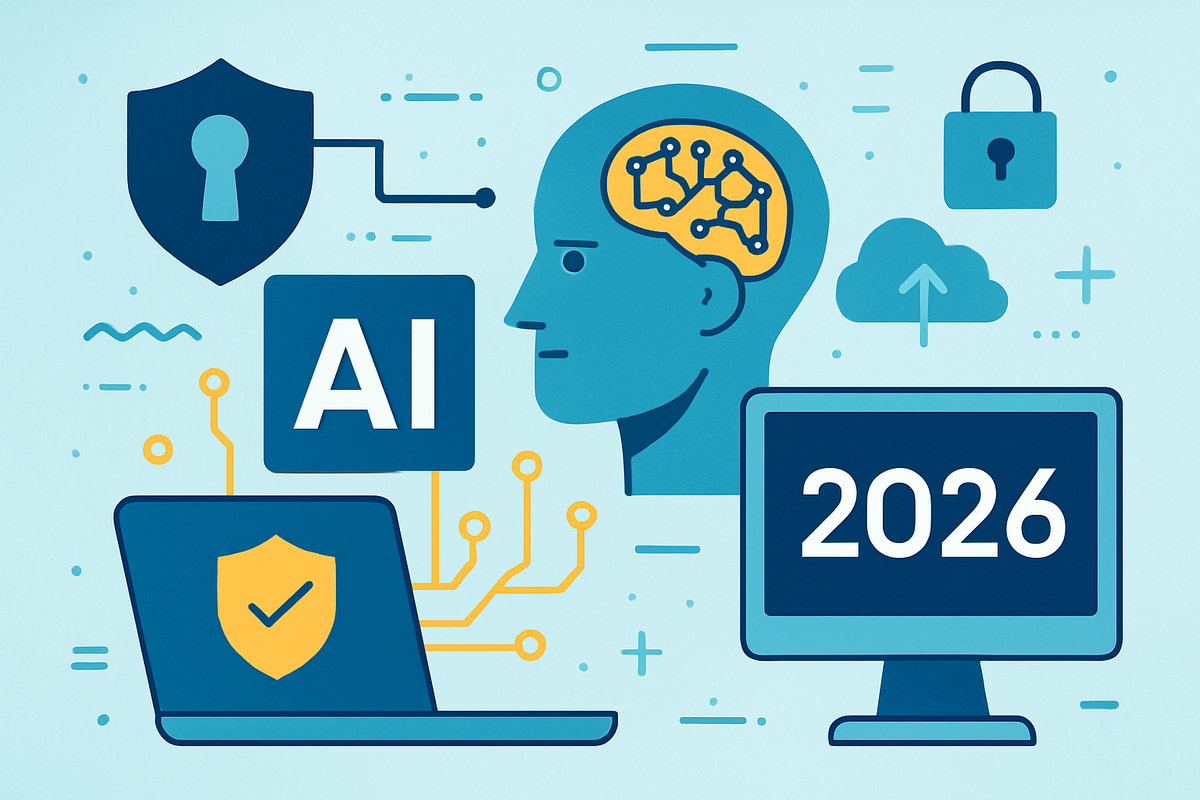
The Future of AI in Cybersecurity: What to Expect in 2026
As the digital landscape evolves, the integration of AI into cybersecurity is not just an option but a necessity. In 2026, AI will play a critical role in both fortifying and challenging cybersecurity measures. This shift will redefine the dynamics of cyber defense and offense, offering new tools for both sides of the spectrum.
AI's Dual Role in Cybersecurity by 2026
AI-Powered Offense
By 2026, attackers will leverage AI to automate and scale cyberattacks, making them more sophisticated. AI's ability to adapt quickly will enable threat actors to discover and exploit vulnerabilities faster than traditional methods. Automated pen testing scenarios will see AI agents continuously targeting endpoints, refining their strategies in real-time. This capability will transform offensive strategies into something more efficient and damaging, necessitating advanced defense mechanisms.
Moreover, AI's growth in natural language processing will allow attackers to craft more convincing phishing attacks. By analyzing language patterns, AI can mimic human communication nuances, increasing the likelihood of successful social engineering. These AI-generated attacks will challenge current security systems, requiring organizations to adopt more sophisticated detection tools to differentiate between human and AI-generated content.
AI will also enable attackers to carry out more personalized attacks. Machine learning models can sift through vast data pools to construct detailed profiles of potential targets. This personalized approach increases the probability of breaching defenses, as tailored attacks are far more difficult to detect and mitigate. Organizations must focus on enhancing user awareness to prepare for these sophisticated threats.
AI-Driven Defense
While AI empowers attackers, it also arms defenders with advanced threat detection and response tools. AI systems can analyze vast amounts of data to identify anomalies and predict potential breaches before they occur. This predictive capability allows organizations to respond proactively, mitigating threats before they manifest. The challenge lies in staying one step ahead of attackers, who are equally equipped with AI.
AI-driven defense mechanisms are expected to develop more sophisticated response strategies by 2026. These systems will not only detect threats but also autonomously deploy countermeasures. This evolution will result in minimized human intervention, allowing cybersecurity teams to focus on strategic rather than tactical responses. Automated defense responses will become a critical element in maintaining robust security postures.
Furthermore, AI will enhance incident response management by providing deeper insights and faster resolutions. AI tools can quickly correlate security events across various platforms, offering a comprehensive view of potential breaches. This capability can significantly reduce response times, ensuring that incidents are managed before they escalate into major security breaches. Organizations will need to integrate AI with their existing incident response frameworks to leverage these benefits fully.
Embedding AI in Cyber Defense Strategies
AI-Assisted Threat Detection
AI will revolutionize threat detection by employing machine learning algorithms to identify abnormal behavior. This approach not only speeds up detection but also improves accuracy, reducing false positives. In 2026, AI-driven tools will be essential for maintaining the integrity of corporate networks.
Additionally, AI's role in threat intelligence will expand, enhancing the ability to predict and prioritize potential threats. By aggregating and analyzing data from various sources, AI can provide real-time insights into emerging threats. This proactive stance enables organizations to allocate resources effectively and reinforce vulnerable areas before they are exploited.
The use of AI in building adaptive security systems is another anticipated advancement. These systems can learn from past security incidents and adapt their responses to new threats. By continuously evolving, adaptive security frameworks ensure defenses remain robust against ever-changing threat landscapes. Companies will need to invest in training AI models to recognize and respond to emerging threats swiftly.
Regulatory Compliance and AI
As AI becomes more ingrained in cybersecurity, regulatory frameworks will tighten. By 2026, we can expect more mandates requiring AI-based monitoring, especially in critical sectors. This will ensure that AI is used ethically and effectively across industries.
- AI-enhanced monitoring tools for compliance
- Regular updates to AI systems for threat management
- Cooperation between regulatory bodies and tech companies
Regulations will likely evolve to address data privacy concerns associated with AI usage in cybersecurity. New guidelines may require organizations to disclose AI-driven decision-making processes and ensure transparency. This approach fosters trust and ensures that AI systems operate within ethical and legal boundaries.
Furthermore, organizations will need to establish clear accountability frameworks for AI-driven actions in cybersecurity. As AI systems become more autonomous, defining responsibility for decisions made by these systems will be imperative. Regulatory bodies will play a crucial role in setting these standards and enforcing compliance across industries.
Operational Challenges and Opportunities
Quantum Computing and AI
The advancement of quantum computing poses both a threat and an opportunity for AI in cybersecurity. As these technologies converge, AI-driven encryption models will need to become quantum-aware to remain effective. Quantum-resistant algorithms will be a critical area of development by 2026.
Moreover, quantum computing's potential to break existing encryption standards will drive innovation in cybersecurity. AI will be key in developing new encryption methods that quantum computers cannot easily crack. As a result, organizations will need to focus on building resilient encryption models that leverage AI to stay ahead of quantum threats.
AI's role in quantum computing research will continue to grow, driving advancements in cryptography and cybersecurity. AI models can simulate quantum environments, enabling researchers to explore potential vulnerabilities and develop countermeasures. This collaboration between AI and quantum computing will pave the way for more secure and robust cybersecurity solutions, essential in the face of emerging technological threats.
Implementing AI with Data Privacy in Mind
One of the challenges of integrating AI into cybersecurity is ensuring data privacy. AI systems must handle sensitive data responsibly. In 2026, emphasis on data sovereignty and privacy will shape the way AI is deployed, ensuring that personal data remains protected.
- Adopting privacy-first AI models
- Ensuring data anonymization in AI processes
- Implementing AI with robust data security protocols
The deployment of AI in cybersecurity will increasingly focus on privacy-preserving techniques. AI models will need to incorporate features that prevent data leakage and unauthorized access. Privacy-preserving AI technologies, such as federated learning, will allow models to learn from decentralized data without compromising individual privacy.
Transparently managing data privacy and AI will be crucial for maintaining organizational trust. Enterprises will need to implement clear policies and communication strategies to demonstrate their commitment to protecting stakeholder privacy. As regulatory scrutiny intensifies, organizations must ensure compliance with data protection laws while leveraging AI's capabilities for enhanced security.
Case Studies Highlighting AI's Impact
AI in Action
Recent case studies demonstrate AI's growing influence in cybersecurity. For example, companies employing AI for threat detection have reported a significant decrease in response times and an increase in identifying complex threats. These real-world applications provide valuable insights into how AI will shape cybersecurity in the future.
In another instance, AI was used to predict and prevent DDoS attacks on a global scale. By analyzing network traffic patterns, AI systems identified unusual spikes and responded by reallocating resources to mitigate the attack. This proactive approach not only reduced downtime but also safeguarded the organization's operational integrity, showcasing AI's potential in preemptive threat management.
AI's role in safeguarding supply chain security has also been highlighted in various studies. AI-driven tools can monitor and assess the risk levels of third-party vendors, ensuring that supply chain vulnerabilities are addressed promptly. This capability is essential for preventing supply chain attacks, which have become increasingly common and damaging in recent years. The continued evolution of AI in this area will be crucial for maintaining comprehensive security across interconnected systems.
Learning from Experience
The evolution of AI in cybersecurity is not without setbacks. Instances of AI systems being compromised highlight the need for continuous improvement and adaptation. These lessons will inform future deployments, ensuring that AI remains a reliable component of cybersecurity strategies.
One key learning point from AI's deployment in cybersecurity is the importance of human oversight. While AI can automate many processes, human analysts are essential for interpreting complex threat landscapes. The combination of AI and human expertise will be vital for developing robust defense mechanisms that adapt to evolving threats.
Additionally, AI's limitations have underscored the need for rigorous testing and validation before deployment. AI systems must undergo comprehensive evaluations in controlled environments to identify potential vulnerabilities. This proactive testing regimen will help mitigate risks and build resilient AI-driven cybersecurity solutions capable of withstanding sophisticated cyberattacks.
The Path Forward: Preparing for 2026 and Beyond
As we look toward 2026, it is crucial to understand the dual nature of AI in cybersecurity. Both a tool for defense and a weapon for offense, AI will continue to evolve, shaping the landscape of cyber threats and protection. Organizations must stay informed and adaptable, leveraging AI ethically and responsibly to safeguard their digital assets.
For more insights on AI's impact, explore our articles on how AI benefits modern tech and its societal impacts.