AI vs Traditional Technology: Navigating Future Trends
Discover the differences between AI vs traditional technology and their impact on evolving tech trends, shaping the future of innovation and industry.

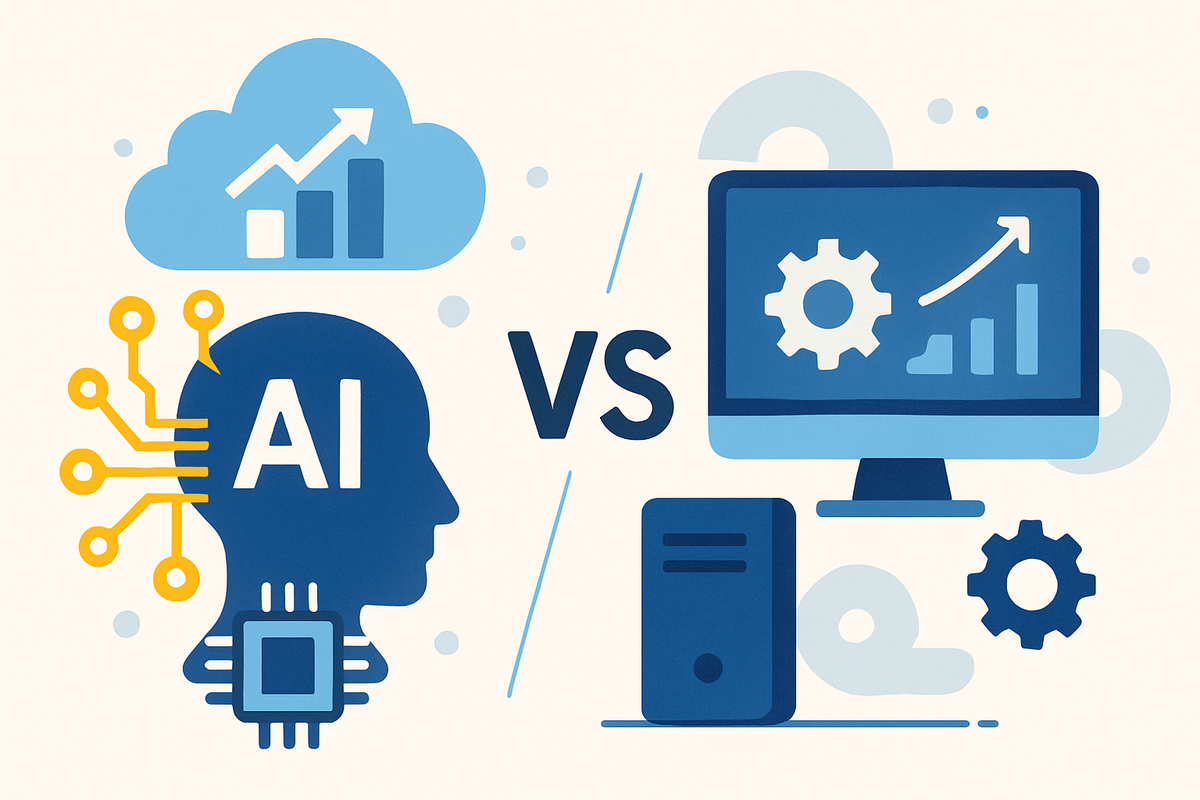
AI vs Traditional Technology: Navigating Future Trends
AI vs Traditional Technology: Key Insights
The debate of AI vs traditional technology is a pivotal topic today. As AI continues to evolve, it challenges long-established tech paradigms. Industries are flooded with promises of AI automation and advanced data analysis. Yet, traditional technology provides the backbone for controlled and reliable software operations.
AI's ability to learn and adapt makes it adept in dynamic environments. Meanwhile, traditional technology shines in specific, well-defined tasks requiring precision and stability. This juxtaposition sets the stage for a fascinating exploration of how these technologies coexist and compete.
In many sectors, AI and traditional technology often work together to enhance performance and efficiency. AI can handle complex data analytics, while traditional systems manage routine operations. This symbiotic relationship can lead to innovative solutions that neither technology could achieve alone.
As businesses navigate this intersection, they must evaluate the appropriate balance of AI and traditional methodologies to suit their unique needs. This requires a strategic approach to technology adoption, leveraging the strengths of both AI and traditional systems. Companies must remain agile to adapt to rapid changes in technology landscapes.
The transition to AI-enhanced systems doesn't mean the end of traditional technology. Instead, it signals an evolution where both can complement each other. Understanding how to integrate these technologies can provide a significant competitive advantage in today's fast-paced digital world.
Furthermore, the complementary nature of AI and traditional technology can drive innovation in product development. By combining AI's predictive capabilities with traditional methods, companies can create more refined, reliable products. This approach not only enhances product quality but also speeds up the time to market.
In addition, a balanced integration ensures resource efficiency by utilizing AI for data-heavy tasks and traditional tech for execution stability. This dual approach maximizes operational efficiency, reducing costs and enhancing productivity. Businesses can thus streamline processes, benefiting from both technologies without compromise.
Ultimately, organizations stand to gain a competitive edge by effectively merging AI innovations with traditional technological frameworks. This fusion leads to greater adaptability and resilience in ever-evolving markets. Maintaining a dynamic technical strategy ensures long-term success and sustainability.
AI Coding in Infrastructure as Code and Pipelines
Infrastructure as Code (IaC) and pipeline contexts are crucial areas where AI is making significant inroads. Consider GitHub Copilot Enterprise integrated with self-hosted GitLab runners in air-gapped environments. Here, AI assists in generating code snippets, reducing human error, and accelerating development cycles.
AI-Assisted Terraform Modules
AI can also enhance Terraform modules by analyzing existing configurations and suggesting optimizations. This AI-driven approach can automate the detection of redundant resources and propose efficient deployment strategies.
- Improved resource management
- Time-efficient infrastructure setup
- Reduction in human error
Such integrations streamline workflows and enhance the accuracy of infrastructure deployments. They enable organizations to maintain agility while managing complex environments.
Moreover, AI in IaC environments can facilitate predictive maintenance by anticipating infrastructure failures before they occur. This proactive approach helps in minimizing downtime and maintaining service continuity. Predictive capabilities allow organizations to plan resource allocation more effectively.
Another advantage of AI in coding pipelines is its ability to provide real-time feedback. Developers can receive suggestions as they code, improving quality and efficiency. This instant feedback loop is crucial for maintaining high standards in software development.
AI tools offer insights into code integrity and security vulnerabilities that might be overlooked. By integrating AI into coding environments, organizations enhance their ability to deliver robust and secure software solutions. The integration of AI into IaC workflows leads to smarter, more resilient technology infrastructures.
In addition to improving efficiency, AI can significantly reduce the time required for testing and validation. By using AI to automate testing processes, organizations can quickly identify defects and deploy fixes. This accelerates release cycles and ensures that high-quality products reach the market promptly.
Furthermore, the integration of AI in pipelines supports continuous learning and improvement. AI algorithms can analyze past deployment data to refine processes, reducing failure rates over time. This ongoing enhancement loop fosters a culture of learning and development within tech teams.
Lastly, AI's role in pipelines can aid in better compliance management by automatically aligning with industry standards. AI tools can monitor and flag compliance issues, facilitating timely corrective actions. This ensures that companies maintain adherence to regulations while enhancing operational efficiency.
Embedding Large Language Models in Operational Tooling
Integrating large language models (LLMs) into operational tools unlocks new possibilities. For example, combining Ollama with LangChain in Kubernetes can revolutionize data processing. As new data lands in MinIO, n8n workflows can trigger retraining via Hugging Face, ensuring models stay current and relevant.
Practical Use Cases
This integration offers multiple benefits in operational efficiency:
- Automated model retraining
- Real-time data analysis and adaptation
- Cost-efficient resource allocation
Such implementations allow businesses to harness the full potential of AI without disrupting existing ecosystems. They ensure that systems remain adaptive and responsive to changing data patterns.
Embedding LLMs into tools can also enhance customer service experiences. AI-driven chatbots can process and respond to queries with unprecedented accuracy. This enhances customer satisfaction by providing quick and accurate solutions.
In addition, large language models support better decision-making by providing comprehensive insights from vast datasets. They help uncover trends and patterns that were previously invisible with traditional analytics. Businesses can make informed decisions that propel growth and innovation.
Furthermore, the flexibility of LLMs allows for scalability across various industry applications. Whether in healthcare or finance, these models provide tailored solutions to complex problems. Their adaptability underpins the transformative potential of AI in diverse operational contexts.
Large language models also facilitate seamless multilingual communication within global organizations. By processing and translating data efficiently, they break down language barriers. This ensures smooth international operations and expands market reach.
Additionally, the integration of LLMs can enhance internal knowledge management systems. By organizing and retrieving information swiftly, these models support informed decision-making. Businesses can capitalize on this capability to drive strategic initiatives and innovation.
Moreover, LLMs contribute to a more personalized user experience by analyzing user data to provide customized content. This targeted approach increases engagement and fosters customer loyalty. Companies can leverage this advantage to strengthen their brand presence in competitive markets.
Infrastructure Implications of AI Integration
Introducing AI into infrastructure brings unique challenges and opportunities. In shared Kubernetes clusters, GPU allocation needs careful management to ensure optimal performance. Networking in Docker Compose also requires attention to maintain seamless connectivity across AI-driven services.
Addressing Model Version Drift
Model version drift can be mitigated by implementing robust version control systems. It's crucial to establish protocols for automating model updates while ensuring they don’t interfere with ongoing operations.
Other critical considerations include securing API keys and maintaining data sovereignty. Organizations must navigate these complexities to ensure that their AI implementations are both secure and compliant.
Integrating AI into existing systems can lead to substantial infrastructure demands, particularly regarding compute resources. Proper planning and scaling strategies are imperative to accommodate this increased demand. Organizations must evaluate their current infrastructure capacity and plan for future scalability.
Security remains a primary concern as AI systems become more integrated into infrastructure. Protecting sensitive data and maintaining privacy are essential to avoid breaches. Implementing robust encryption and access controls are vital steps in securing AI-enhanced environments.
Alongside these concerns, maintaining clear documentation and compliance with industry standards can aid in smoother AI integration. Comprehensive records ensure transparency and facilitate audits. Compliance with standards not only ensures legal adherence but also builds trust with stakeholders.
Another key aspect is ensuring the resilience of AI systems against cyber threats. As AI becomes more central to operations, it may become a target for attacks. Developing robust cybersecurity measures is essential to safeguarding AI investments.
Moreover, the energy consumption of AI technologies must be addressed through sustainable practices. Implementing energy-efficient algorithms and optimizing resource use can mitigate environmental impacts. Businesses can align their AI strategies with sustainability goals, contributing positively to global efforts.
Finally, fostering a culture of innovation and learning within teams can improve AI integration outcomes. Encouraging cross-functional collaboration and continuous skill development helps teams adapt to technological changes. This