AI in Online Learning 2026: Transforming Education
Explore the future of education with AI in online learning 2026, featuring personalized courses, advanced virtual tutors, and transformative learning experiences.

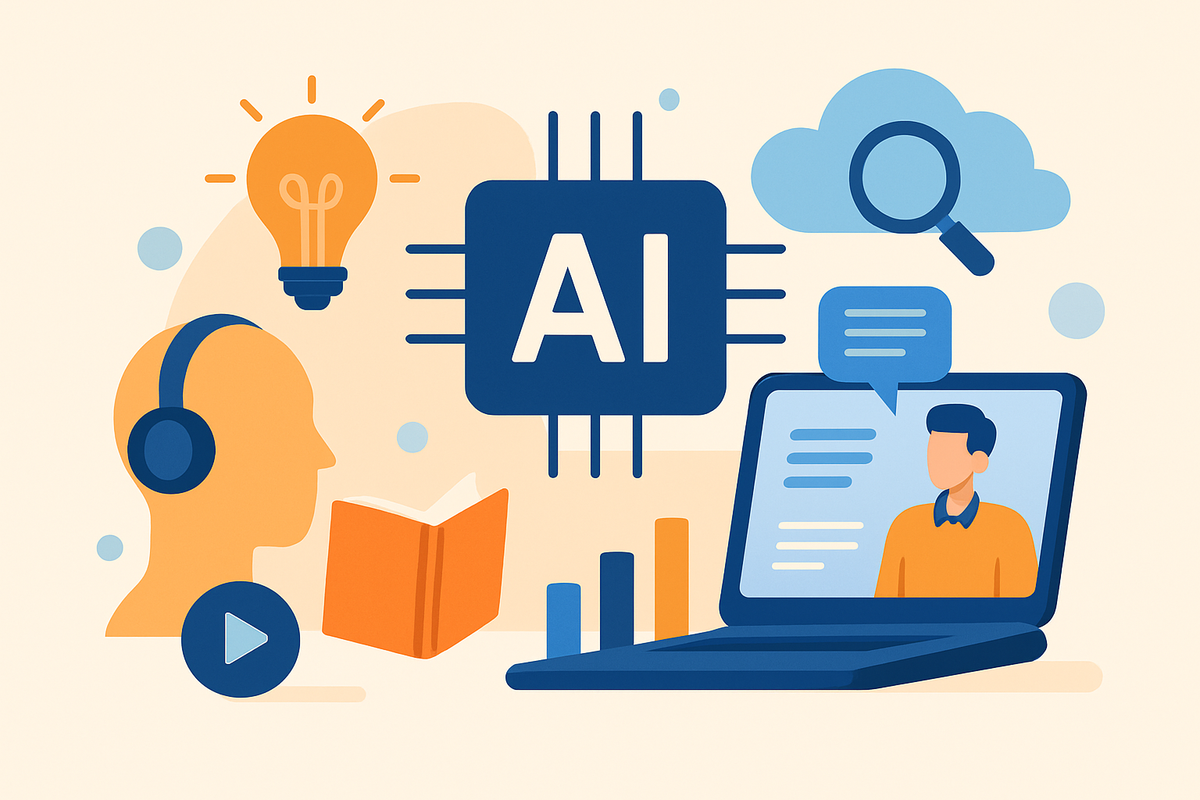
Harnessing AI in Online Learning 2026
By 2026, AI in online learning will redefine how education is delivered and experienced. Picture a world where courses adapt to each student's needs and virtual tutors emulate human interactivity. These advancements promise more engagement and improved learning outcomes, addressing issues educators face today.
AI Coding in IaC/Pipeline Contexts
Automating Infrastructure with AI
AI has become a critical component in Infrastructure as Code (IaC) and DevOps pipelines. Tools like GitHub Copilot Enterprise integrate seamlessly into self-hosted environments, even if they are air-gapped. This allows AI to assist in writing Terraform modules, ensuring consistency and efficiency.
Beyond just writing code, AI optimizes infrastructure management by predicting potential system failures. This proactive approach allows teams to address issues before they disrupt operations. Additionally, AI-driven analytics provide insights into resource allocation, ensuring optimal performance without waste.
Integrating AI within the pipeline also enhances security measures. Automated threat detection and response systems can identify and counteract breaches faster than traditional methods. This level of vigilance is crucial for maintaining the integrity and confidentiality of sensitive data within complex networks.
AI solutions in pipelines are continuously learning and improving through machine learning algorithms. This self-improvement loop means that AI can adapt to new threats and infrastructure changes swiftly. This adaptability ensures that the tools remain relevant and effective in diverse operating conditions.
Moreover, AI can assist in regulatory compliance by automatically adjusting infrastructure to meet specific legal requirements. This feature is critical for companies operating in multiple jurisdictions with varied compliance standards. By automating this process, organizations can reduce the risk of non-compliance fines and penalties.
Case Study: GitHub Copilot with GitLab Runners
In companies leveraging self-hosted GitLab runners, integrating AI tools like GitHub Copilot can revolutionize workflow. These environments benefit from AI's ability to suggest code snippets, enhancing productivity and reducing human error.
- Automated linting and code style enforcement.
- Intelligent suggestions for infrastructure optimization.
- Seamless integration into CI/CD pipelines.
One notable advantage is the speed at which development teams can operate. With AI-driven suggestions, code reviews become more efficient, allowing developers to focus on complex problem-solving. Over time, this leads to a significant reduction in the overall development cycle.
Moreover, AI tools help maintain coding standards across diverse teams. As organizations grow, ensuring a consistent codebase can be challenging, but with AI, uniformity is achieved with minimal effort. This consistency aids in onboarding new team members, who can quickly adapt to established practices.
The collaboration between AI and human developers fosters an environment of continuous learning and innovation. Developers gain insights from AI's vast data processing capabilities, allowing for creative solutions. This synergy can lead to innovative products and services, enhancing the organization's competitive edge.
Additionally, the integration of AI into development practices supports sustainable growth by optimizing resource usage. By recommending efficient coding practices, AI reduces unnecessary computational demands and energy consumption. This approach not only benefits the environment but also cuts operational costs for the organization.
Embedding LLMs in Operational Tooling
The Role of Large Language Models (LLMs)
LLMs like those from Ollama and LangChain are being embedded into Kubernetes and workflow automation tools. These models facilitate operations by understanding context and executing commands smartly.
By leveraging LLMs, organizations can achieve higher efficiency in task automation. For example, natural language inputs can trigger complex workflows, reducing the need for manual coding interventions. This not only saves time but also minimizes errors associated with manual processes.
Additionally, LLMs enhance decision-making processes by analyzing vast amounts of data to provide actionable insights. Their ability to comprehend and process complex datasets allows organizations to make informed decisions quickly. This capability is particularly valuable in sectors where data-driven strategies are crucial for success.
LLMs also play a crucial role in customer service by enabling personalized interactions. By understanding customer inquiries precisely, LLMs can provide quick and accurate responses, enhancing user satisfaction. This personalized approach can lead to increased customer loyalty and a strong brand reputation.
In the realm of content creation, LLMs assist in generating relevant and engaging material swiftly. They can draft reports, create marketing content, and even assist in technical documentation. This efficiency allows human teams to focus on strategic activities rather than mundane, repetitive tasks.
Example: Orchestrating with n8n and Hugging Face
Consider an n8n workflow that triggers retraining of models on Hugging Face when new data arrives in MinIO. This setup keeps models relevant and accurate.
{ "node": "n8n", "action": "trigger", "target": "ollama-service" }This seamless integration demonstrates the power of combining different AI tools to achieve a cohesive system. Organizations benefit from streamlined processes that automatically adapt to changing data landscapes. This adaptability ensures that AI models remain effective and aligned with current operational needs.
Furthermore, such integrations enable continuous improvement without needing a complete overhaul of existing systems. The modular nature of these setups allows for easy updates and enhancements, ensuring that organizations remain competitive in rapidly evolving industries.
The adaptability of AI systems to dynamic environments is a significant advantage. As data inputs change, AI models can adjust their parameters automatically to maintain accuracy. This flexibility supports business agility, allowing quick pivots in strategy when market demands shift.
By using integrated AI systems, organizations can also foster innovation through collaborative tool ecosystems. These ecosystems encourage cross-functional team collaboration, combining different expertise to solve complex challenges. This collaborative environment can drive breakthrough innovations that position an organization as a market leader.
Infrastructure Implications
Sharing GPU Resources in Kubernetes
As AI tasks increase, efficient GPU allocation in shared Kubernetes clusters becomes vital. Proper scheduling and resource management ensure that your operations aren't bottlenecked.
Managing GPU resources effectively means balancing workload demands with available hardware. Strategies like dynamic scaling can accommodate varying usage patterns, providing resources when needed and conserving them during low-demand periods. This flexibility is essential for maintaining performance without incurring unnecessary costs.
Moreover, advancements in GPU virtualization allow multiple tasks to share hardware resources efficiently. By partitioning GPUs, organizations can run concurrent AI models, maximizing throughput. This capability is especially beneficial for companies that rely heavily on AI for real-time analytics and predictions.
Efficient GPU utilization strategies can also support sustainability goals by reducing energy consumption. By optimizing resource usage, organizations minimize their carbon footprint while maintaining high-performance computing capabilities. This balance between performance and environmental responsibility is increasingly important for modern enterprises.
Additionally, AI-driven monitoring tools can predict GPU usage trends, allowing for proactive resource planning. These insights help in making informed decisions about hardware investments and scaling strategies. By anticipating future needs, organizations can avoid resource shortages and maintain operational continuity.
Networking and Security in Docker Compose
Networking complexities arise when integrating AI services in Docker. Ensuring secure API communication and managing model version drift are crucial.
- Secure API key management.
- Data sovereignty considerations.
- Version control for AI models.
Ensuring that API endpoints are secure involves implementing robust authentication protocols. This prevents unauthorized access and protects sensitive data exchanges between services. Additionally, encryption plays a vital role in safeguarding data during transmission, ensuring integrity and confidentiality.
Version control for AI models is equally important. Regular updates are necessary to incorporate new findings and improvements. Automated version tracking tools can facilitate smooth transitions between model iterations, avoiding compatibility issues and ensuring seamless operations.
Organizations must also consider compliance with data sovereignty laws when managing AI services across borders. Adhering to local regulations regarding data storage and access is critical to avoid legal issues. Implementing policies that support compliance ensures that sensitive information remains protected and within legal